
Editorial voice: Monem · Published 2026-10-18 · Article resources updated November 18, 2026
Key takeaways
- Build a financial foundation before taking investment risk.
- Choose an account and investment based on your goals and time horizon.
- Review fees and diversify; losses remain possible.
General educational information, not personalized financial advice. Read our Financial Disclaimer.
You open your banking app after payday, pay the rent, buy groceries, and look at what’s left. Maybe it’s $40. Maybe it’s $150. Someone online says you should be buying stocks, but another person says the market could crash tomorrow. Meanwhile, your credit card bill isn’t going anywhere.
So where are you supposed to start?
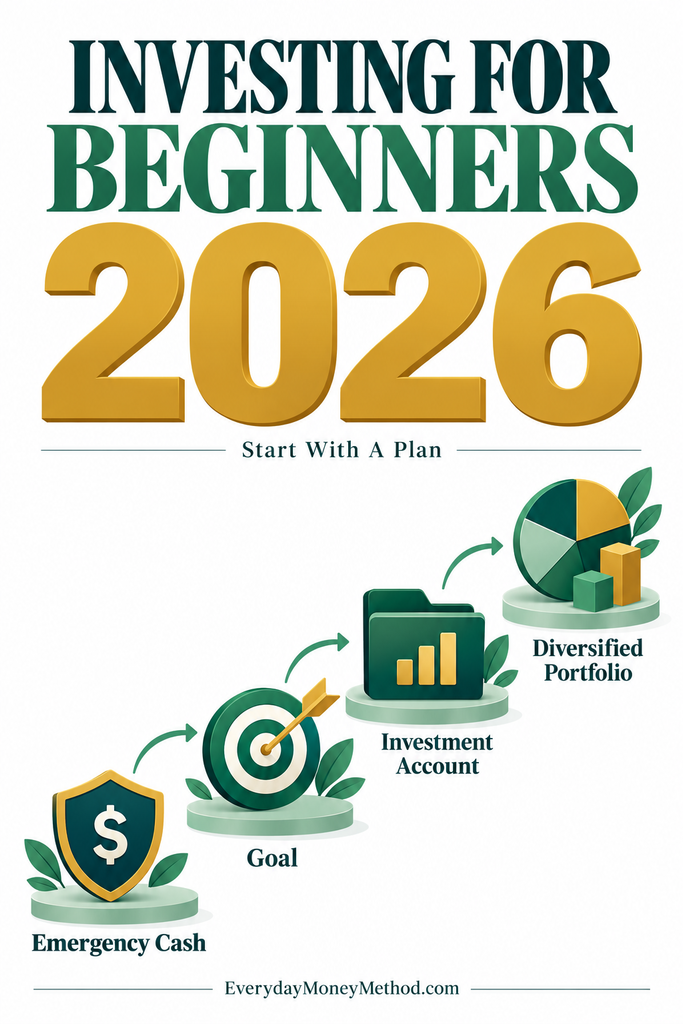
Investing for beginners starts with a simple plan, not a winning stock pick. Give your everyday money a safety net, choose a goal you won’t need to fund next month, use an account with the right tax rules, and buy a diversified investment you understand. Then invest an amount you can realistically keep contributing. You don’t have to pretend the market will always go up, or that your budget has unlimited room.
That approach matters in 2026. In the Federal Reserve’s survey covering 2025, 73% of U.S. adults said they were doing okay or living comfortably financially, while 28% said they were worse off financially than a year earlier. Those are different questions, not conflicting statistics. They help explain why the advice to simply “invest more” can miss what life actually costs.
Let’s make a plan that works with real paychecks, real bills, and the fact that investments sometimes lose value.
What Does Investing Actually Mean?
Related reading: Explore our 401(k) beginner guide for a complementary approach.
Investing means putting money into assets you hope will grow in value or pay income over time. Buying a stock gives you a small ownership interest in a business. Buying a bond generally means lending money to a government or company. Buying a mutual fund or exchange-traded fund (ETF) can give you a share of many investments in one purchase.
Saving is different. The $1,000 you may need for a car repair belongs somewhere accessible and relatively stable, not in a stock fund that could fall sharply the week your car breaks down. Investments are better suited to money you can leave alone through market ups and downs. How you divide money between stocks, bonds, and cash depends on when you need it and how much risk you can afford to take.
Think of the difference this way: savings protect your next unexpected Tuesday; investing helps fund a much later chapter of life. You need not choose only one.
Step 1: Get Your Financial Foundation Ready Before You Invest
You don’t need perfect finances. You do need to know whether an investment contribution would put a necessary expense at risk.
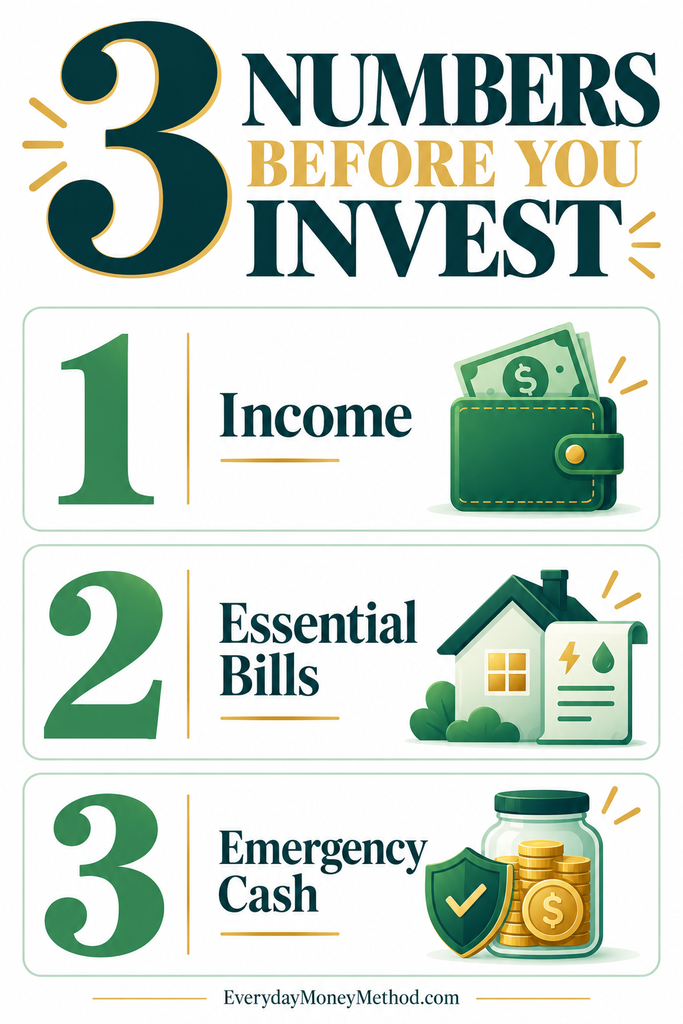
Start with three numbers: the money you have coming in, the essential bills you must pay, and the cash you can reach if something goes wrong. The Consumer Financial Protection Bureau recommends creating a dedicated emergency fund and starting with an achievable amount rather than waiting until you can save a large sum.
Build an emergency cushion you can actually use
Related reading: Explore our emergency fund guide for a complementary approach.
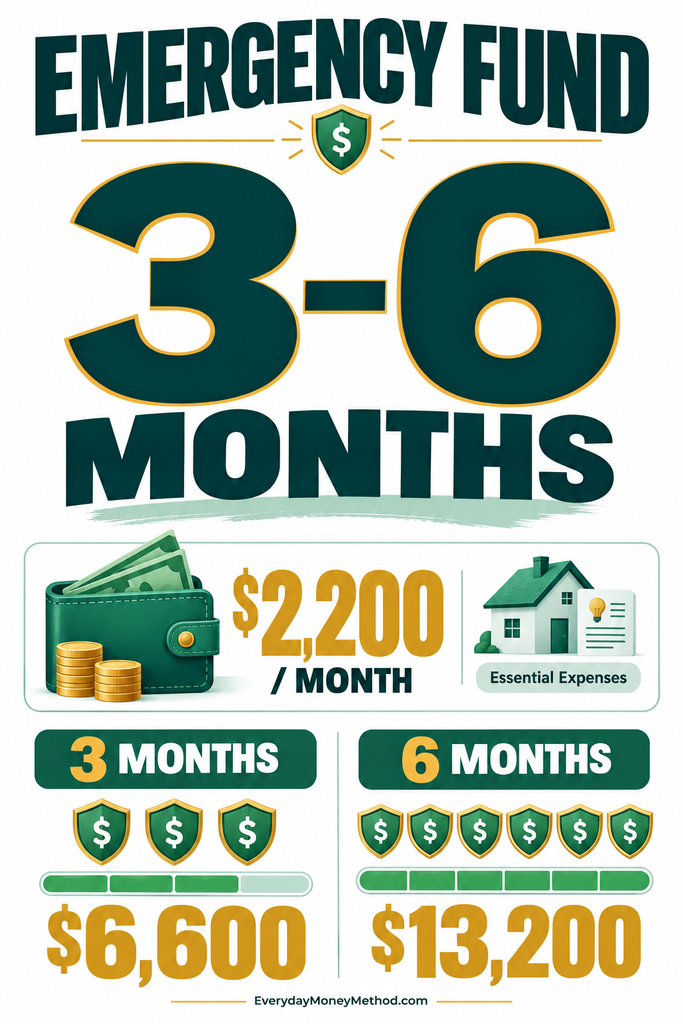
A common longer-term target is three to six months of essential expenses, although the right amount depends on income stability, household needs, and available support. Don’t mistake that goal for a rule saying you cannot invest a dollar until you have saved six months of expenses.
Realistic calculation, not a reported household budget: If essentials cost $2,200 monthly, three months equals $6,600 and six months equals $13,200. That may take time. You could first aim to keep $500 or $1,000 available, then build the larger reserve while deciding whether modest retirement contributions fit your budget.
Put this money where you can access it when needed, such as an appropriate insured bank savings account. An ETF is not a substitute for emergency cash.
Look at expensive debt before chasing investment returns
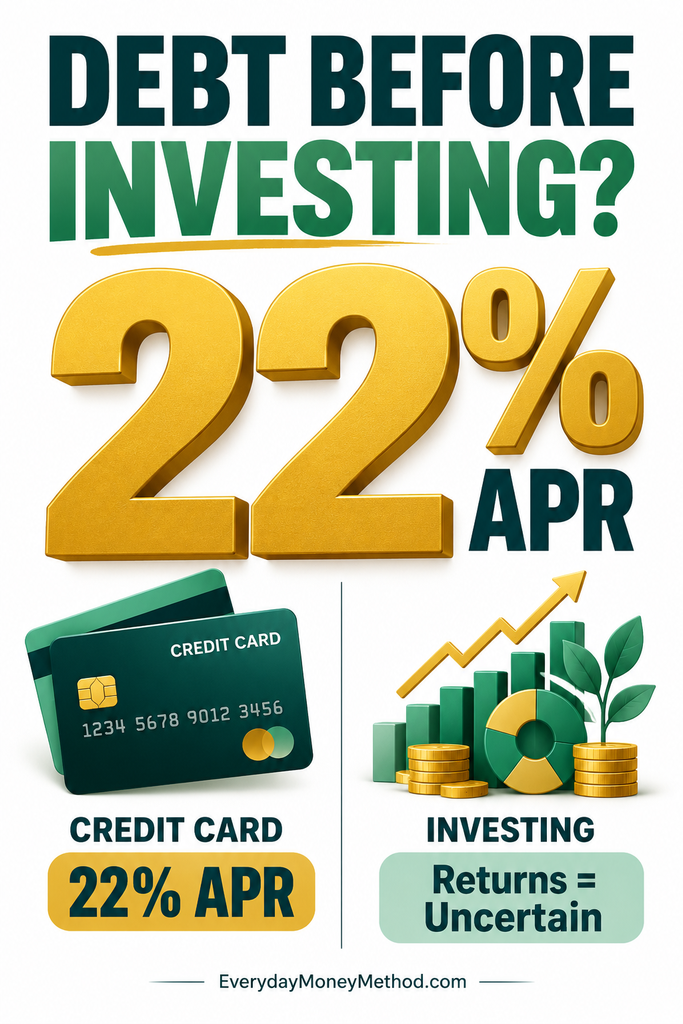
Say you carry a credit card balance charging 22% APR. Investing extra money in stocks does not give you a dependable return anywhere close to that rate. Reducing that balance avoids interest on the amount paid down. It’s a known financial benefit; future investment gains are uncertain.
There is a nuance: an employer 401(k) match may justify contributing some money while you tackle debt and build cash savings, provided necessities are covered. The exact priority depends on the match, debt terms, your emergency cushion, and your income stability. Don’t skip groceries or minimum debt payments to collect a match.
Step 2: Decide When You’ll Need the Money
Related reading: Explore our debt payoff guide for a complementary approach.
Before choosing a fund, write down what the money is for. “To build wealth” is a good reason, but it isn’t yet a timeline.
| When you expect to need the money | A practical starting point | What to watch |
|---|---|---|
| Within roughly 0–3 years | Insured savings, suitable CDs, or short-term Treasury bills | Access dates, penalties, changing rates, and inflation |
| About 3–5 years | Favor capital stability; assess any market exposure carefully | A stock-market drop could delay a purchase |
| 5–10 years | Consider a diversified stock/bond mix depending on flexibility | Market risk still exists, especially near your deadline |
| More than 10 years | Diversified long-term investment funds may make sense | Volatility, fees, taxes, and changing goals |
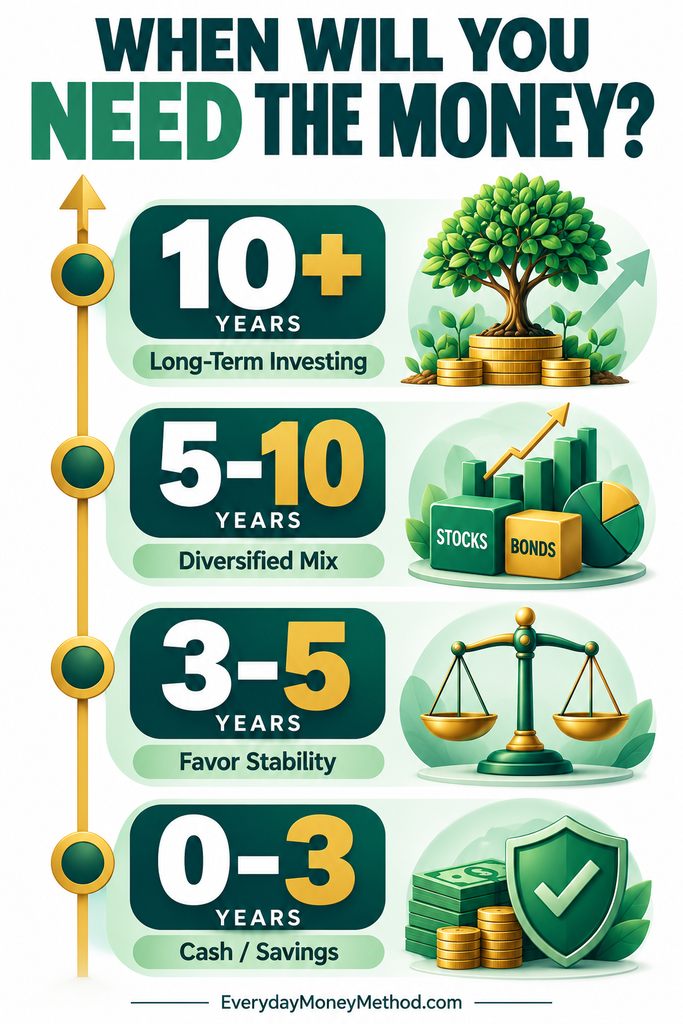
These are decision guides, not rigid legal thresholds. A home down payment you absolutely need in two years should be handled differently from retirement money you won’t touch for 30 years. The SEC emphasizes time horizon and risk tolerance when selecting an investment mix.
For a concrete cash alternative, TreasuryDirect offers Treasury bills with maturities from four to 52 weeks, and a $100 minimum purchase in $100 increments. A bill bought at auction has terms and a rate determined through that process; don’t assume today’s yield is fixed forever, and selling before maturity introduces price considerations.
Step 3: Choose the Right Investing Account in 2026
Here’s a distinction that trips people up: the account is where you invest; the fund or stock is what you invest in. Opening a Roth IRA doesn’t automatically tell the money what to buy.
| Account | Often useful for | Important consideration |
|---|---|---|
| Workplace 401(k) or 403(b) | Retirement and possible employer matching contributions | Limited menu of investments; plan rules, fees, and vesting may apply |
| Traditional IRA | Retirement savings with possible tax deductions | Deductibility depends on income and workplace coverage |
| Roth IRA | Retirement savings with qualified tax-free withdrawals | Contributions use after-tax income; income eligibility rules apply |
| Taxable brokerage account | Flexible long-term goals outside retirement | Dividends and realized gains can create taxes; no IRA-style tax break |
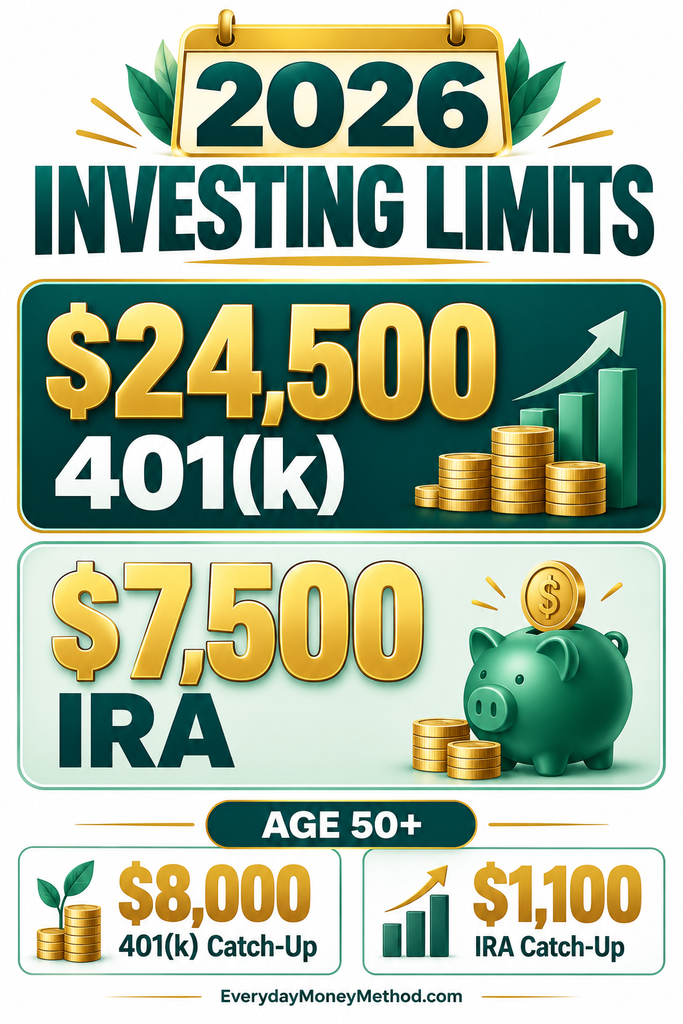
The IRS announced that in 2026 the standard employee contribution limit for most 401(k), 403(b), governmental 457 plans, and the TSP is $24,500, while the combined traditional/Roth IRA annual contribution limit for eligible individuals is $7,500. For age 50 and older, the general 401(k) catch-up limit is $8,000 and the IRA catch-up limit is $1,100, subject to plan and other rules. Special higher catch-up provisions apply at certain ages. These are ceilings, not suggested contribution amounts.
For Roth IRAs, the 2026 modified adjusted gross income phase-out is $153,000–$168,000 for single filers and $242,000–$252,000 for married couples filing jointly. Eligibility also depends on other rules, including compensation. Traditional IRA deduction rules can differ. Check your actual filing situation before contributing.
A realistic employer-match example
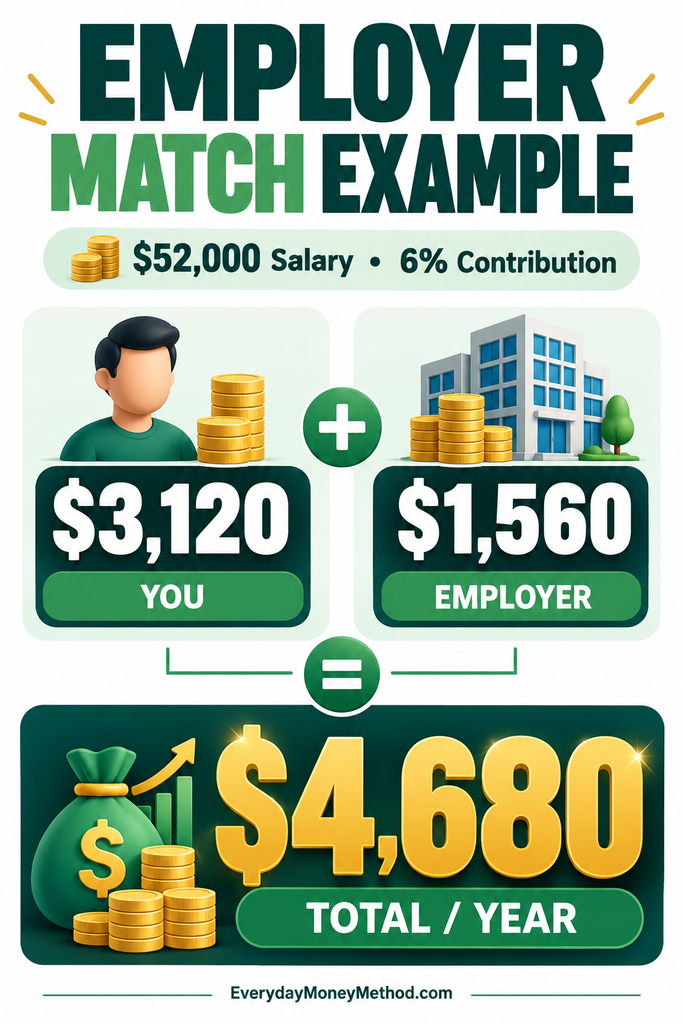
Illustrative workplace plan, not an actual employer’s published policy: You earn $52,000 a year, are paid every two weeks, and your employer matches 50% of your contributions on the first 6% of pay.
Contributing 6% of your salary would mean $3,120 of your own money a year, or $120 per paycheck across 26 pay periods. Your employer’s stated match would add $1,560 a year, or $60 per paycheck, for a combined $4,680 deposited over the year before investment returns and fees. Your actual take-home-pay reduction may differ because of tax withholding and whether you use pre-tax or Roth contributions. Employer vesting and match schedules can also change when those dollars fully belong to you.
If $120 per paycheck doesn’t fit, ask your benefits team whether you can begin with a smaller percentage and raise it later. The goal is to understand the real benefit, not squeeze out contributions by missing essentials.
Which account should come first?
If your employer offers a useful match and your budget allows it, getting some or all of that match can be a strong first retirement step. Next, compare additional 401(k) saving, an IRA, debt payoff, and taxable investing against your goals, taxes, and plan fees. There is no one account order that’s correct for every household.
Step 4: Pick an Investment You Can Explain to Someone Else
You don’t have to identify the next giant technology company to begin investing. For many long-term beginners, a broad, low-cost index fund is easier to understand and manage than a collection of speculative stock ideas.
Index funds, ETFs, and mutual funds
An index fund tracks a defined market index. An index fund can be structured as an ETF or a mutual fund. A broad U.S. stock-market fund owns many companies; an international stock fund adds exposure outside the U.S.; a broad bond fund holds many fixed-income securities. An ETF trades during market hours, while a traditional mutual fund generally prices transactions once daily.
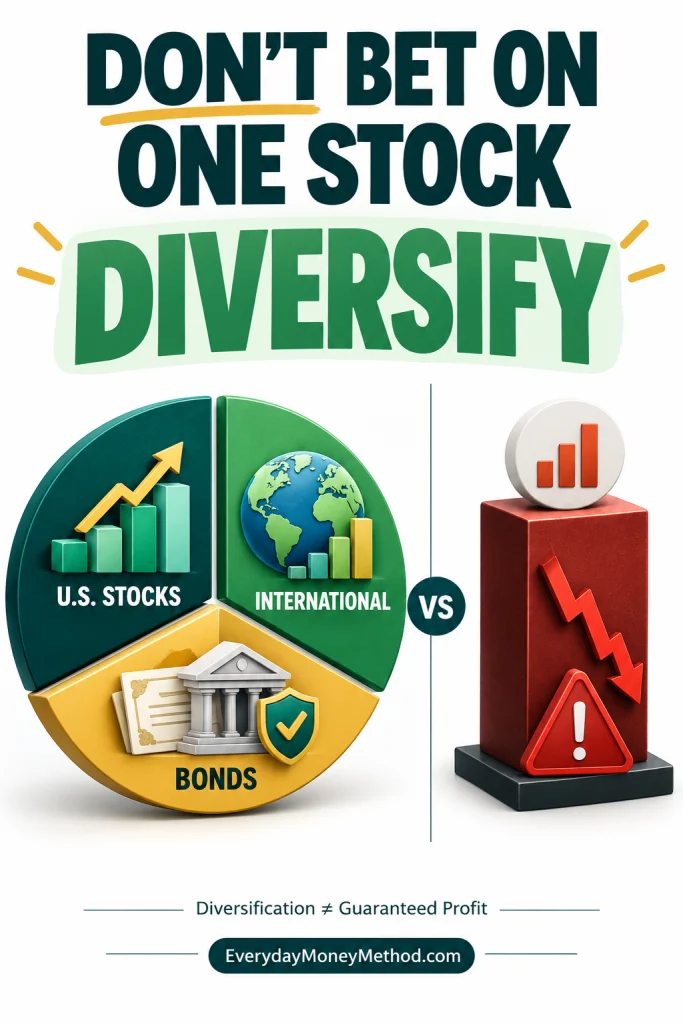
A popular beginner approach is a diversified fund mix rather than choosing individual winners. A three-fund portfolio, for example, typically uses U.S. stocks, international stocks, and U.S. bonds. You still have to decide how much goes into each. Owning three funds doesn’t automatically make your allocation appropriate for a purchase next year.
A target-date retirement fund is another possible one-fund solution. It generally combines diversified investments and adjusts the mix as the target retirement year approaches. Review its fees, underlying holdings, and approach to risk. Funds with the same target year can differ.
And one subtle detail: an S&P 500 fund contains large U.S. companies, but it isn’t a complete world stock-and-bond portfolio. Adding more narrowly focused technology funds doesn’t necessarily give you more meaningful diversification.
What does diversification actually protect you from?
Diversification reduces the risk of your entire plan depending on one company’s results. It does not guarantee a profit or protect you from a broad market decline. Stock funds can lose substantial value. Bond funds can fall when interest rates rise, and some borrowers can default. The proportions you choose are called your asset allocation, and they should fit your goals.
Step 5: Keep Investment Fees From Quietly Eating Your Returns
A fund’s expense ratio is an ongoing annual cost expressed as a percentage of assets. You don’t necessarily see a separate bill because fund expenses are reflected in fund performance.
Here’s the math on a fixed $10,000 balance for a single year:
| Annual expense ratio | Approximate fund costs on $10,000 |
|---|---|
| 0.05% | $5 |
| 0.50% | $50 |
| 1.00% | $100 |
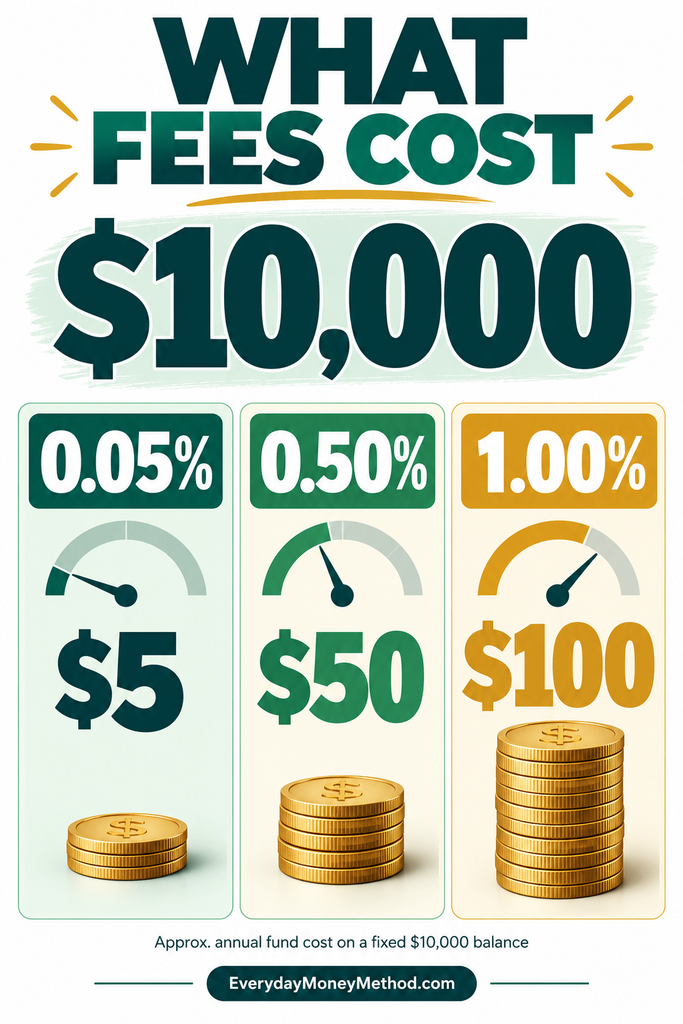
These are illustrations of the fee rates, not quotes for specific available funds. Actual costs change with your account balance and may include other charges, such as an advisor fee, trading costs, or plan administration fees.
For historical context, the Investment Company Institute reported that the asset-weighted average expense ratio for index equity ETFs was 0.14% in 2025. The average across all equity mutual funds was 0.40%. Those are different fund categories, so the comparison is useful context, not proof that one individual ETF always costs less than one individual mutual fund.
Read the prospectus and fee table. The SEC specifically warns that fees, expenses, and taxes can reduce what investors ultimately keep.
Step 6: Make Your First Investment, Not Just Your First Deposit
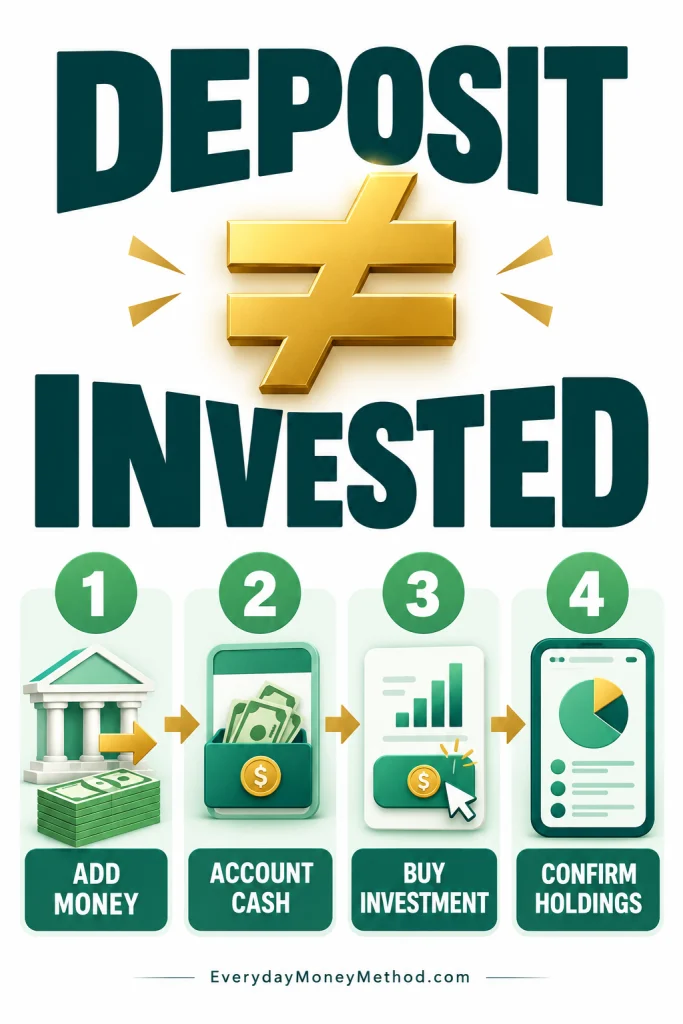
A beginner’s first investment can be fairly ordinary. Here’s a step-by-step approach:
- Choose a reputable brokerage or your workplace retirement platform. Check investment selection, account minimums, recurring purchase options, fees, customer support, and whether the broker is registered.
- Open the account type that fits your goal. Expect identity verification and a linked bank or payroll funding method.
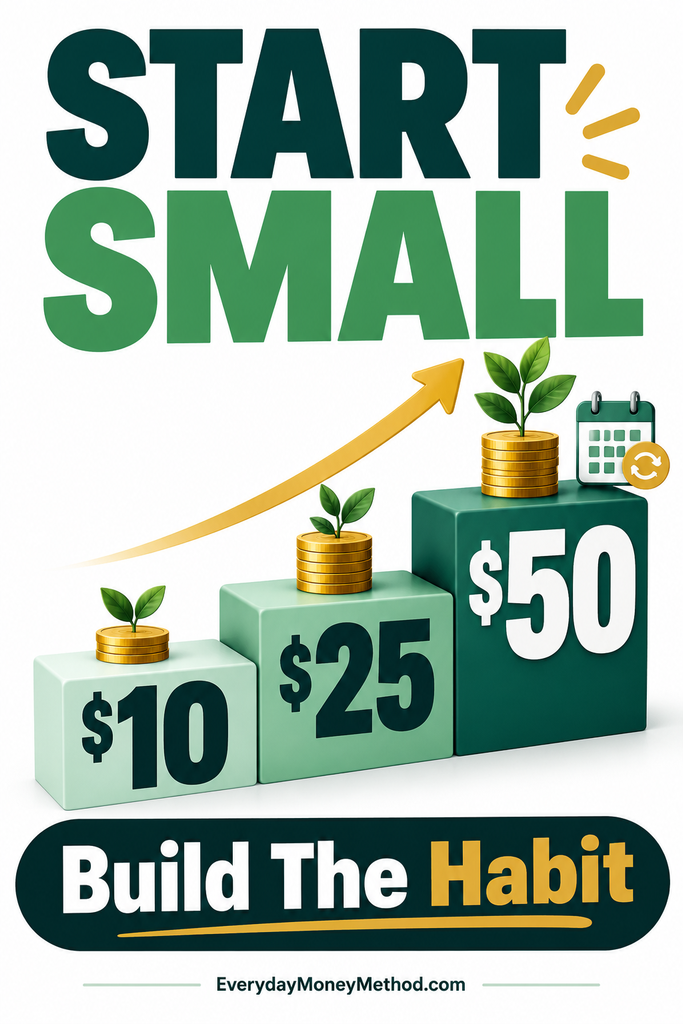
- Transfer an amount you can afford to leave invested. For someone with a tight budget, that could be $10, $25, or $50 rather than a big lump sum.
- Select the actual investment in the brokerage or retirement account. Review the fund name and ticker, index, holdings, expense ratio, and minimum purchase.
- Place the order and confirm it was filled. Depending on the platform and order type, an ETF order may not execute immediately.
- Review the holdings or positions page afterward. If all you see is an uninvested cash balance or settlement fund, you may still need to place a buy order.
- Set a recurring contribution and, if supported, a recurring investment purchase. They aren’t always the same setting.
This last distinction is important enough to repeat. Sending money into an IRA is not the same action as buying investments inside that IRA. Broker instructions and available automatic features differ, so always confirm the actual holdings rather than assuming the setup is complete.
Many providers also offer fractional shares, allowing eligible securities to be purchased in dollar amounts instead of whole shares. Fidelity, for example, describes investing by dollar amount, while Robinhood advertises eligible fractional-share investing starting at $1. Availability and terms vary, and those details are not an endorsement of either provider.
Step 7: Make Small, Regular Contributions Work Over Time
If you’re investing for decades, consistency gives compounding a chance to matter. Compounding means gains that remain invested may generate additional gains. The painful part is that investment values don’t grow in tidy straight lines.
Consider $100 invested at the end of every month. This table is a pure mathematical illustration, not a forecast. It assumes a constant nominal rate compounded monthly, no initial deposit, no taxes, no fees, and no withdrawals.
| Time invested | Total you contribute | Value at hypothetical 5% a year | Value at hypothetical 7% a year |
|---|---|---|---|
| 10 years | $12,000 | $15,528 | $17,308 |
| 20 years | $24,000 | $41,103 | $52,093 |
| 30 years | $36,000 | $83,226 | $121,997 |
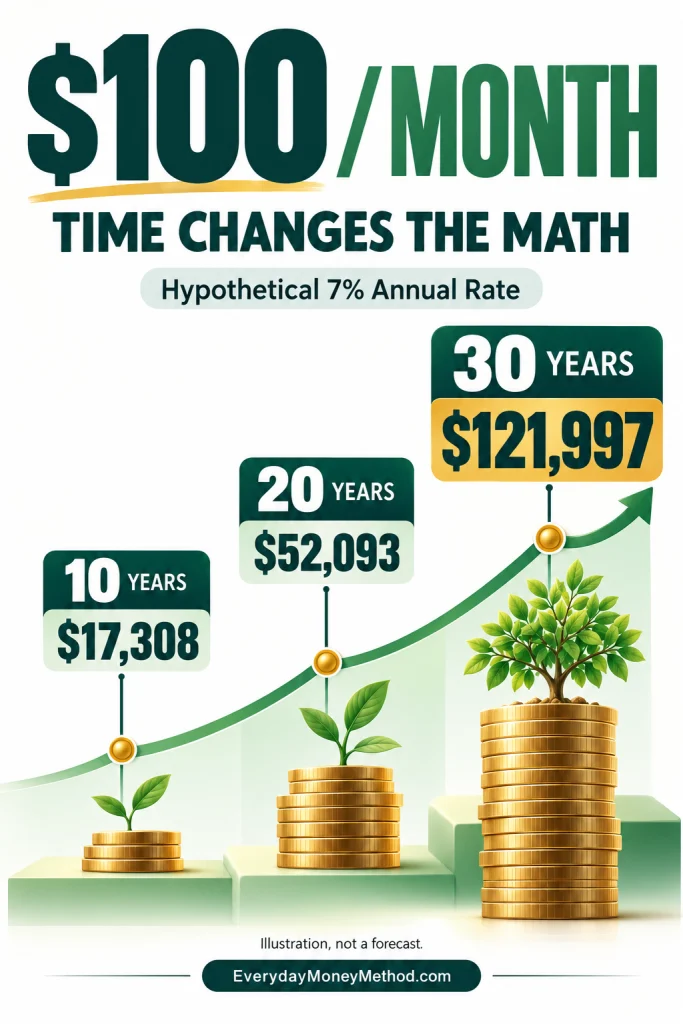
Those values are future nominal dollars. They would buy less if prices rise over time. Real investments have good years and bad years, and you can end with less than you contributed. The point is to see the relationship between contributions, time, and possible growth, not to promise a 5% or 7% annual return.
If you can invest $25 per month, that’s a valid starting contribution if your finances allow it. If your income later increases, a modest raise in the recurring amount can help. And if a job loss forces you to pause, prioritize necessities and review the plan when things improve.
A Real Beginner-Investing Example From 2026
It’s useful to see how someone described an actual process rather than relying only on made-up retirement calculators.
In an April 29, 2026 article for NerdWallet, Bella Avila, writing about investing in her twenties, described first building an emergency fund in a high-yield savings account. She then contributed to her workplace 401(k), selected a 2065 target-date fund, and later considered a Roth IRA after talking with a financial planner. She also discussed using a brokerage account for other long-term goals.
That’s one person’s documented approach, not evidence that her account choices or allocation will fit everyone. What makes the sequence instructive is its attention to several decisions: protect emergency cash, make use of workplace benefits, actually choose investments, and keep the door open for other goals. Notice that it doesn’t require finding the year’s top-performing stock.
What Should You Do When the Market Drops?
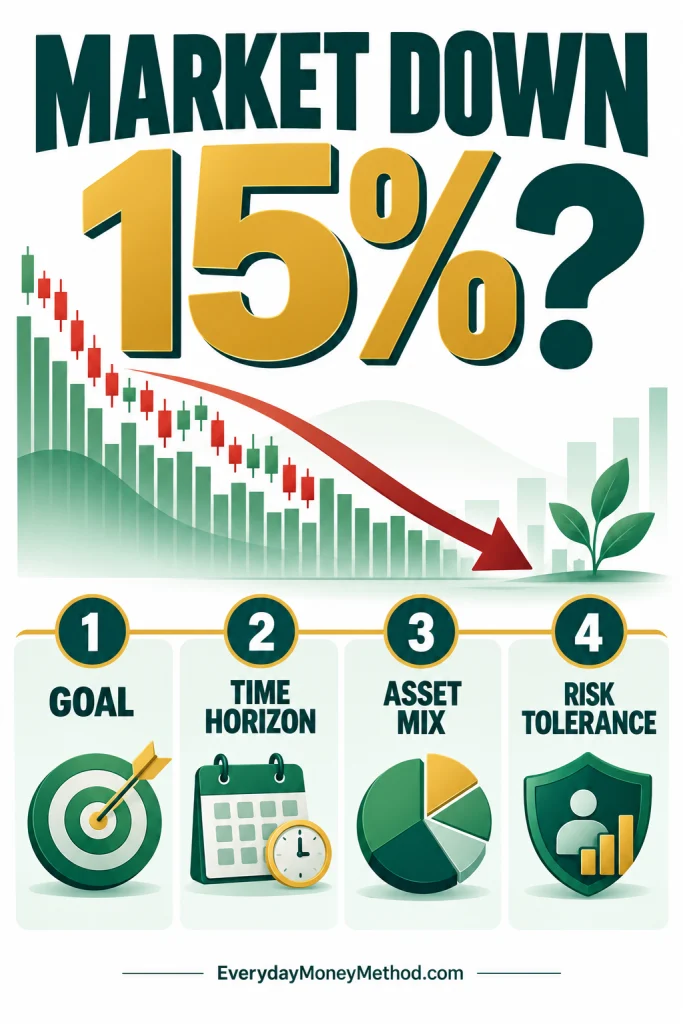
Imagine opening your account and seeing it down 15%. That is a hypothetical decline, not a prediction about the next market move. Your plan should tell you what to consider before the drop happens.
First, ask whether you still have the same goal and time horizon. If you need the money soon, a market decline may reveal that you took more risk than the goal could afford. If you’re investing for retirement decades away, selling everything simply because prices fell may turn a temporary decline into a permanent realized loss. But staying invested also does not guarantee the investment will recover on your schedule.
Second, check whether your asset mix has drifted. Rebalancing means bringing stocks, bonds, and other holdings back toward the allocation you selected, while considering transaction costs and potential taxes. Some investors review the mix once or twice a year or after major life changes, rather than reacting daily.
Third, be honest about your tolerance for losses. A strategy you cannot stick with through normal volatility may be too aggressive, even if someone online says it’s mathematically optimal.
Investing Risks Beginners Should Understand in 2026
Your broker can be protected while your investments lose money
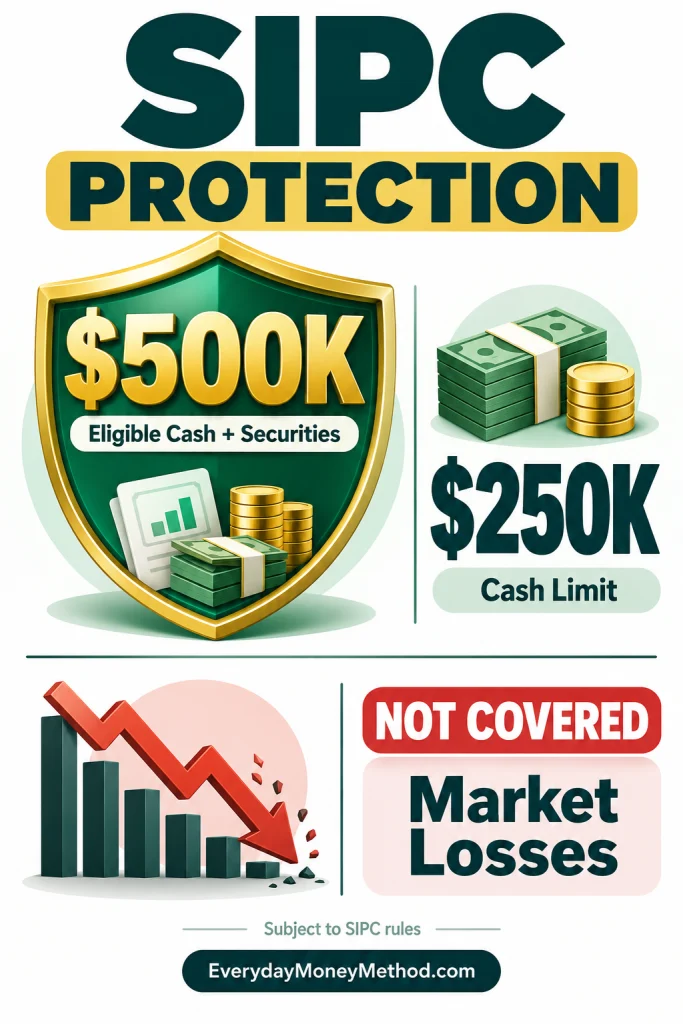
If a SIPC-member brokerage firm fails and customer assets are missing, SIPC protections generally cover eligible cash and securities up to $500,000 per customer, including a $250,000 limit for cash, subject to the rules. SIPC does not insure you against falling stock or fund prices, a bad investment, or poor advice. It is also different from FDIC insurance for eligible bank deposits.
A popular stock is not a retirement strategy by itself
Owning one stock can be interesting, but it exposes you to that company’s specific problems. Be cautious with concentrated bets, trading on margin, options you don’t understand, and highly speculative assets. A diversified core portfolio is a more understandable place for many beginners to start.
Promises of guaranteed stock-market profits are a warning sign
The Federal Trade Commission cautions against pitches promising big returns with little risk, secret systems, pressure to act quickly, and fake testimonials. Verify any investment professional or firm through official registration and background-check tools before handing over money.
Taxes matter even when you don’t cash out everything
In a taxable brokerage account, selling at a gain may create capital-gains taxes, dividends may be taxable even if you haven’t withdrawn cash from the account. A retirement account can have different rules, and withdrawals before the applicable age or outside qualifying conditions may trigger taxes or penalties. Keep transaction records and check the rules for your actual filing situation.
A Realistic First-Month Investing Plan
You can learn the basics without trying to solve 30 years of retirement planning in a weekend.
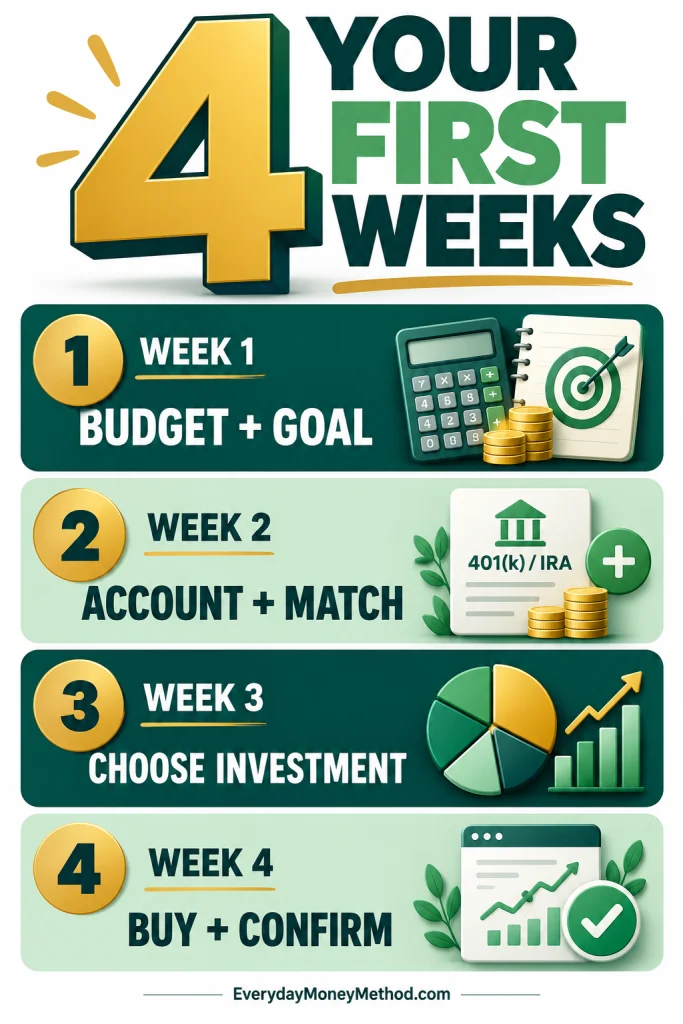
Week one: List essential monthly expenses, minimum debt payments, cash savings, and any retirement benefit available through work. Pick one goal with a timeframe.
Week two: Review your employer’s match and vesting rules. If you don’t have a plan at work, compare a Roth or traditional IRA with a taxable brokerage account. Check eligibility, costs, and withdrawal restrictions.
Week three: Look at one or two diversified approaches, such as a broad index-fund mix or an appropriate target-date fund. Read fees and holdings before you choose.
Week four: If your budget is ready, make a small contribution, place the actual investment order, and confirm the holdings appear. Put a reminder on your calendar to check contributions and your plan in a few months.
There is no rule that you must finish every step in four weeks. If the first month’s honest conclusion is that you need emergency savings and less credit-card debt before buying funds, that’s a useful financial decision too.
Frequently Asked Questions About Investing for Beginners
How much money do I need to start investing in 2026?
Some platforms allow fractional-share purchases starting at $1, although eligible investments, fund minimums, and fees vary. Your real minimum is the amount your budget can afford to leave invested without risking essentials.
Is $100 a month enough to begin investing?
Yes, $100 per month can be a meaningful starting habit when it fits your financial situation. It’s $1,200 in annual contributions before any market gains or losses. Over time you may increase, pause, or adjust the amount; it isn’t a guarantee of wealth.
Are index funds safer than individual stocks?
A broad index fund reduces exposure to a single company’s performance, but can still lose substantial value when the overall market falls. A narrow sector index fund may be much less diversified than its label sounds.
Should I invest or pay off my credit card first?
Credit-card debt often deserves priority because avoiding debt is a more predictable benefit than hoping for a market return. If you have an affordable employer retirement match, you may choose to contribute enough to obtain it while reducing debt. Your expenses and cash buffer come first.
Should I buy stocks while the market is at a record high?
No one can reliably identify the best day for a long-term investment. Rather than making your whole plan depend on a headline, focus on when you’ll need the money, what you own, your ability to absorb a decline, and how regularly you can contribute. If a near-term need would be harmed by a price drop, that money probably should not be in an aggressive stock portfolio.
Can I lose all my money in an ETF?
An ETF is a structure, not a promise of safety. A diversified broad-market fund is different from a leveraged, concentrated, or speculative ETF. Losses are possible in all of them, and the risks depend on what the fund holds and how it operates. Read the prospectus.
The Bottom Line: Start With a Plan That Survives Real Life
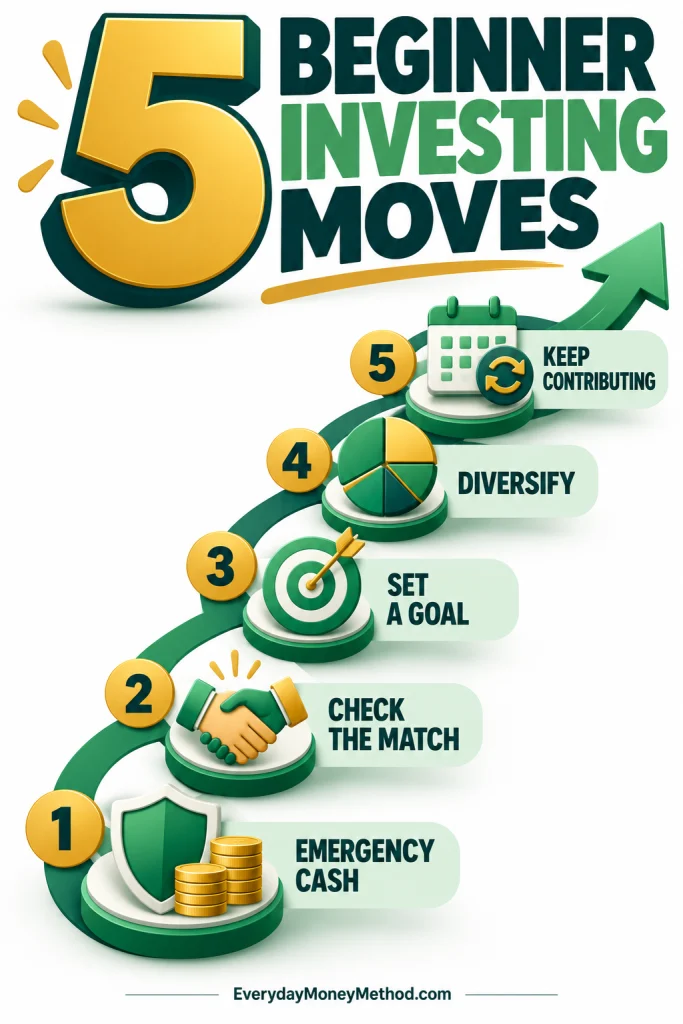
If you came here looking for one stock to buy in 2026, that isn’t the most useful first answer. Start by making sure next month’s rent and surprise expenses won’t depend on stock-market prices. Find out whether your employer will match retirement contributions. Choose a long-term goal, an appropriate account, and a diversified investment with understandable fees.
Then invest an amount you can sustain, even if it’s small, and check that the money actually gets invested.
Building wealth is not a race to make your first $100 look impressive. It’s the slower work of making decisions you can repeat when life is expensive, markets are unpredictable, and the exciting headlines have moved on.
Investing for Beginners: Printable Worksheets, Action Plans & Checklists (2026)
Learning how to invest is one thing. Turning that knowledge into decisions that fit your income, expenses, savings, and goals is another.
That’s why we’ve created a collection of beginner-friendly investing worksheets, printable action plans, checklists, and a decision flowchart to help you organize your next steps.
These resources are designed for real financial situations—not ideal budgets or guaranteed investment returns. You can fill them out digitally or print them and work through them at your own pace.
You don’t need to complete everything in one day, and you don’t have to purchase an investment before your finances are ready.
1. Printable Investing Worksheets
Start with these six worksheets to understand your financial situation before making investment decisions.
Worksheet 1: My Financial Readiness Worksheet
List your monthly income, essential expenses, debt payments, and available emergency cash. Use the results to decide whether an investment contribution would fit your current budget.
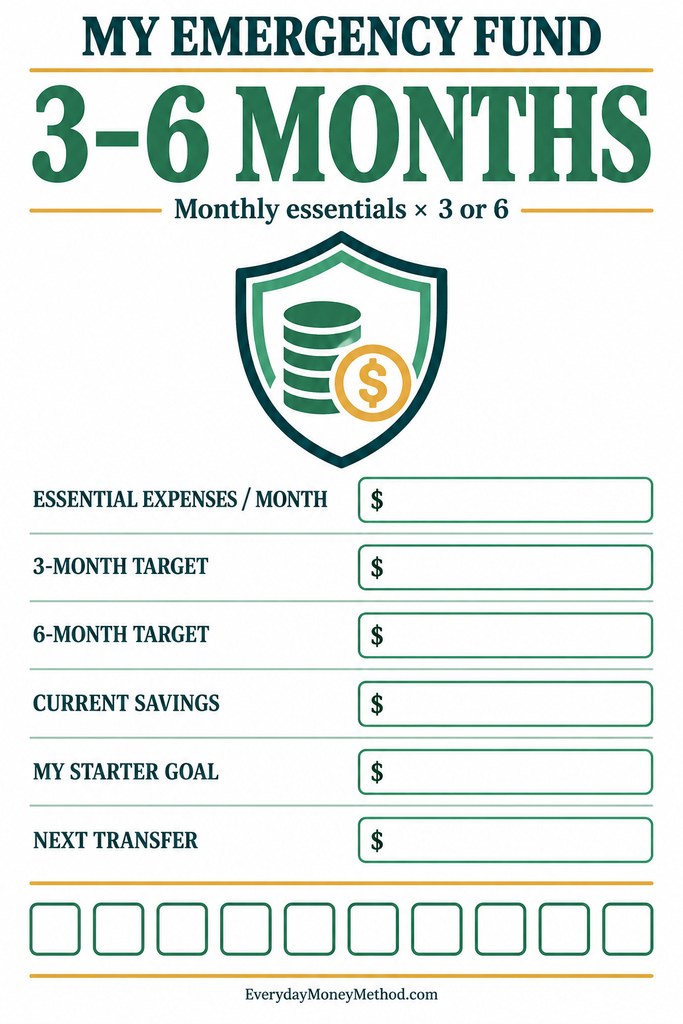
Worksheet 2: Emergency Fund Calculator
Estimate your emergency savings needs using three and six months of essential expenses. Set a smaller starting goal if the full target feels unrealistic right now.
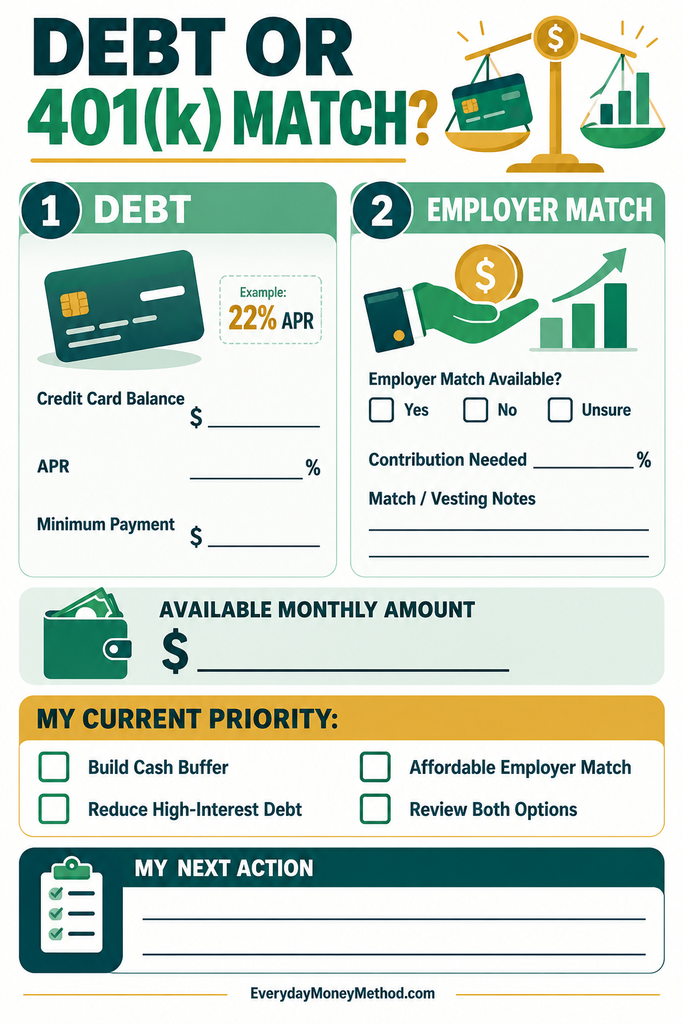
Worksheet 3: Debt vs. Employer Match Worksheet
Compare your debt with any available workplace retirement match. Consider required payments, available cash, contribution rules, and vesting before deciding what to prioritize.
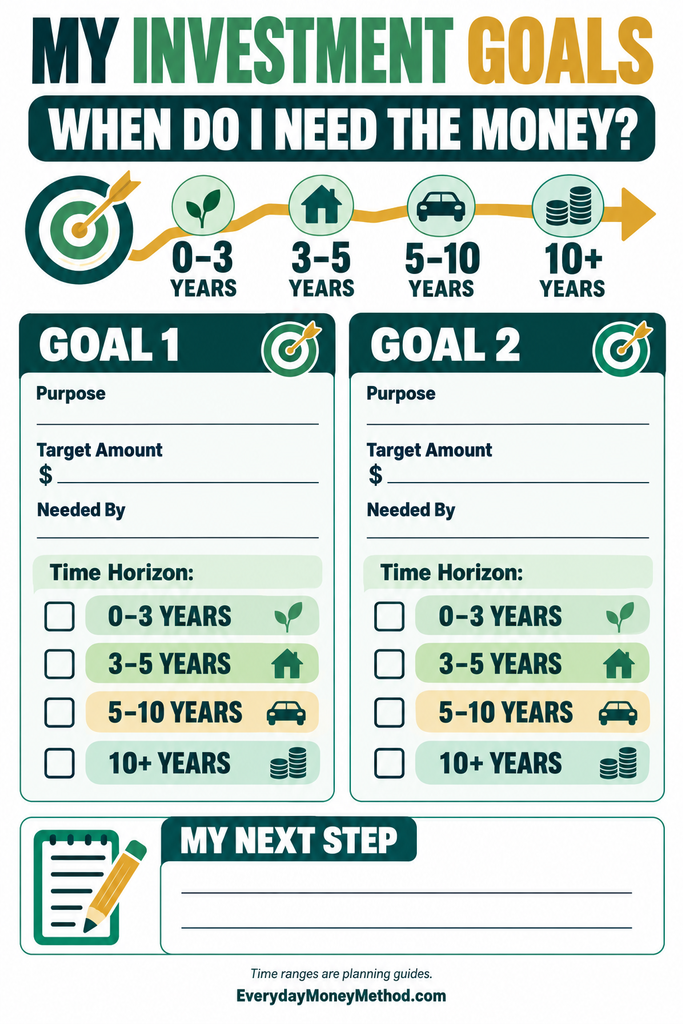
Worksheet 4: Investment Goal & Time Horizon Planner
Write down what you’re investing for, when you’ll need the money, and how much you hope to accumulate. Use your timeline to guide decisions about liquidity and investment risk.
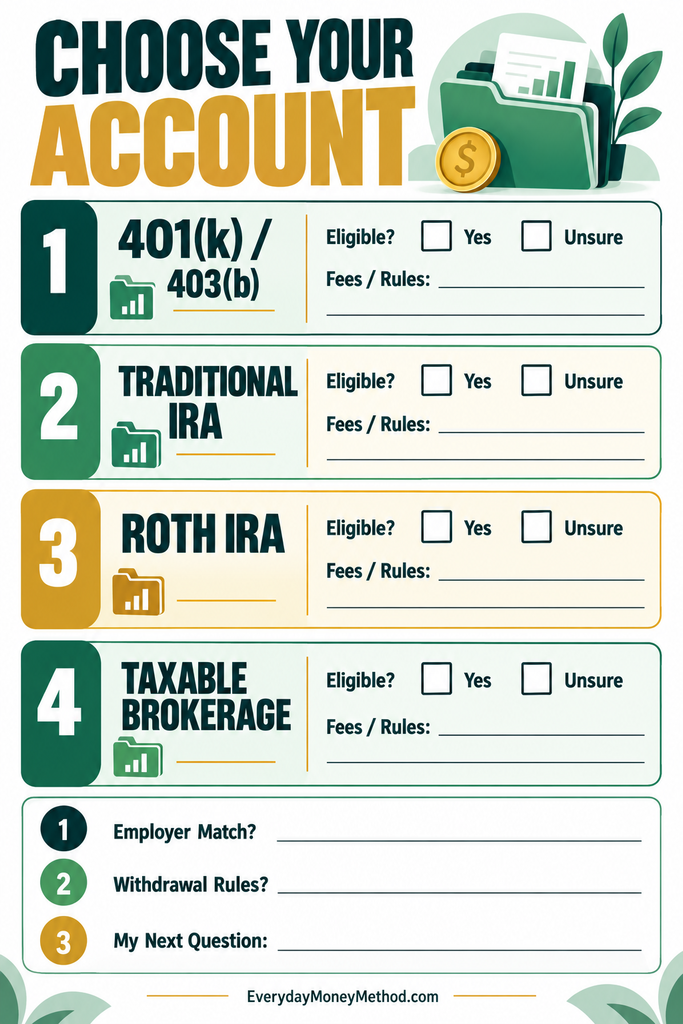
Worksheet 5: Investment Account Comparison Worksheet
Compare workplace retirement accounts, traditional IRAs, Roth IRAs, and taxable brokerage accounts. Review eligibility, fees, tax treatment, and withdrawal restrictions.
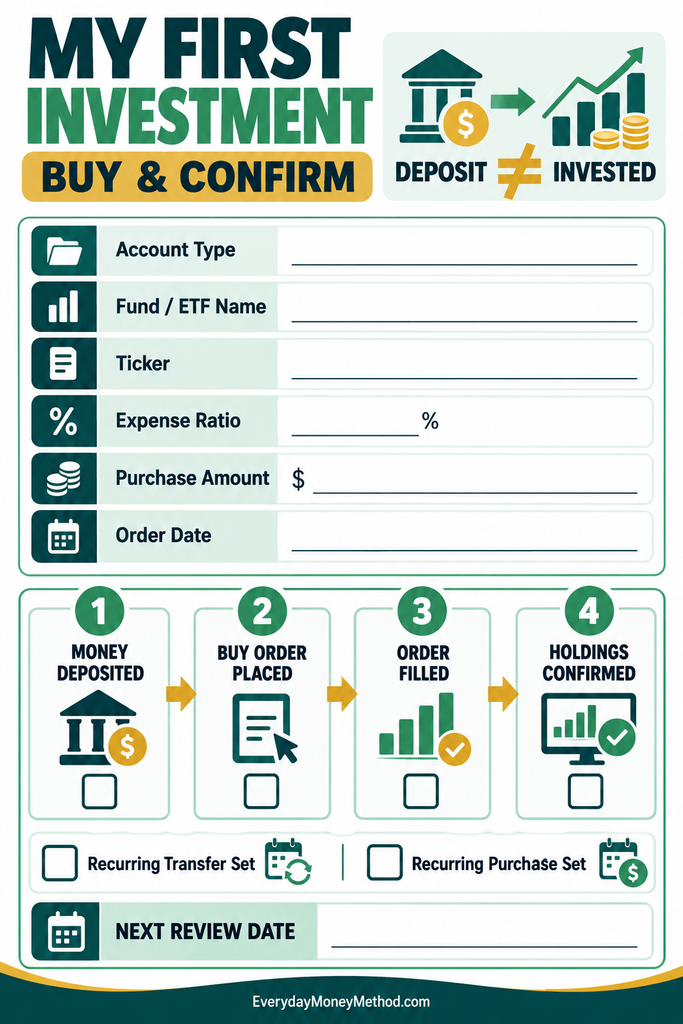
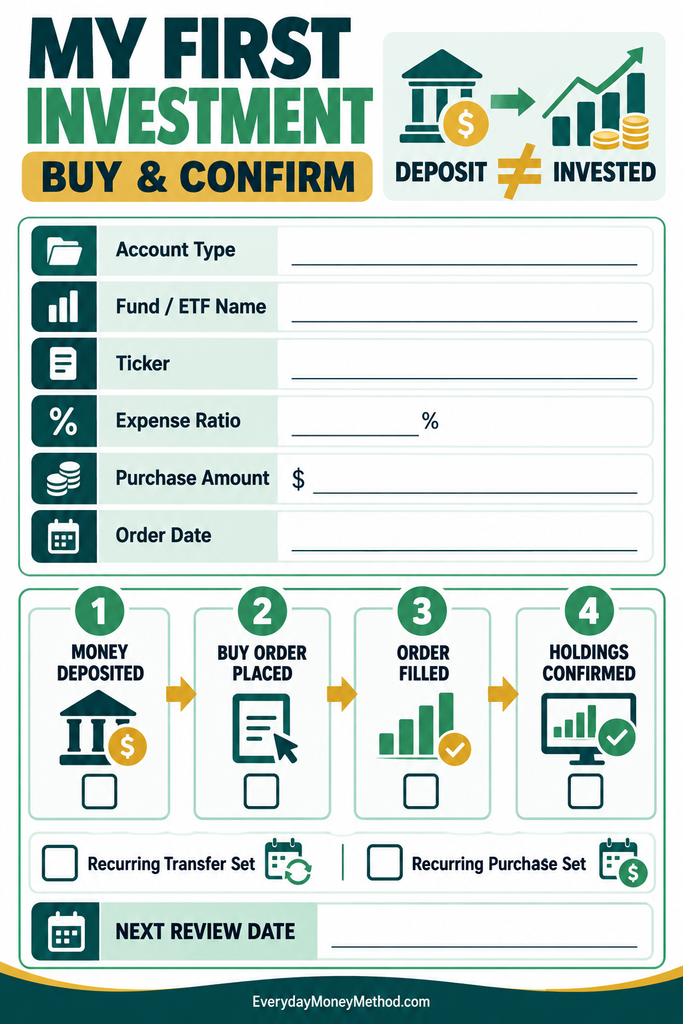
Worksheet 6: First Investment Purchase Tracker
Record your selected investment, purchase amount, and transaction details. Confirm that your order was filled and that the investment appears in your holdings not just as cash in the account.
2. Beginner Investing Action Plans
Not everyone is ready to invest immediately. Choose a plan that fits your financial situation and available time.
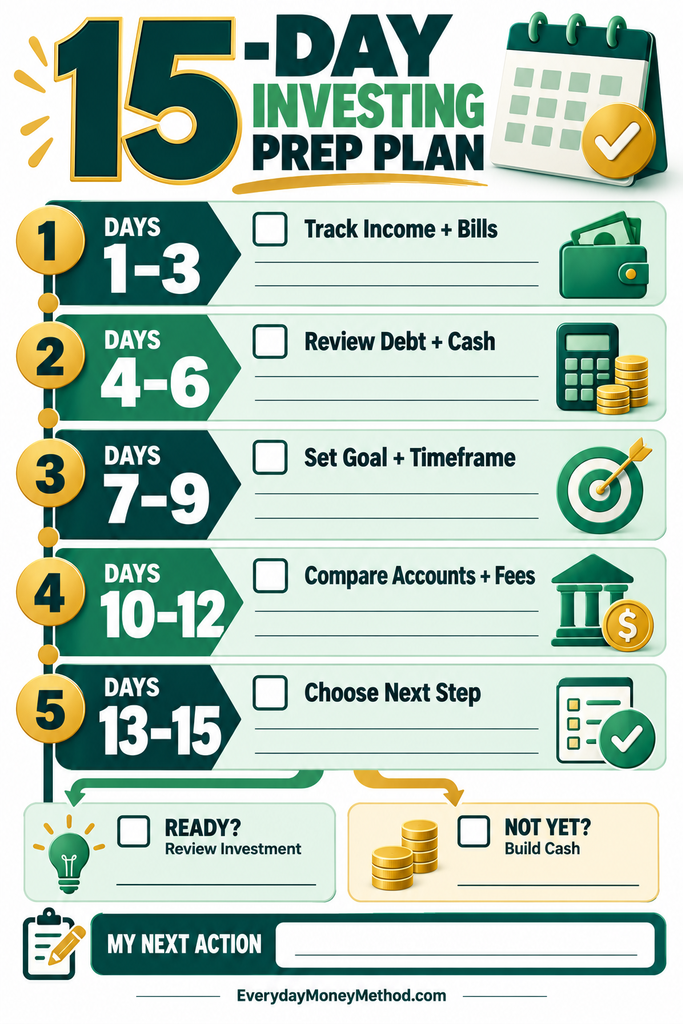
15-Day Investing Preparation Plan
Use two weeks to review your finances, explore account options, define a goal, and identify your next realistic action. This is a preparation plan, not a deadline to buy stocks.
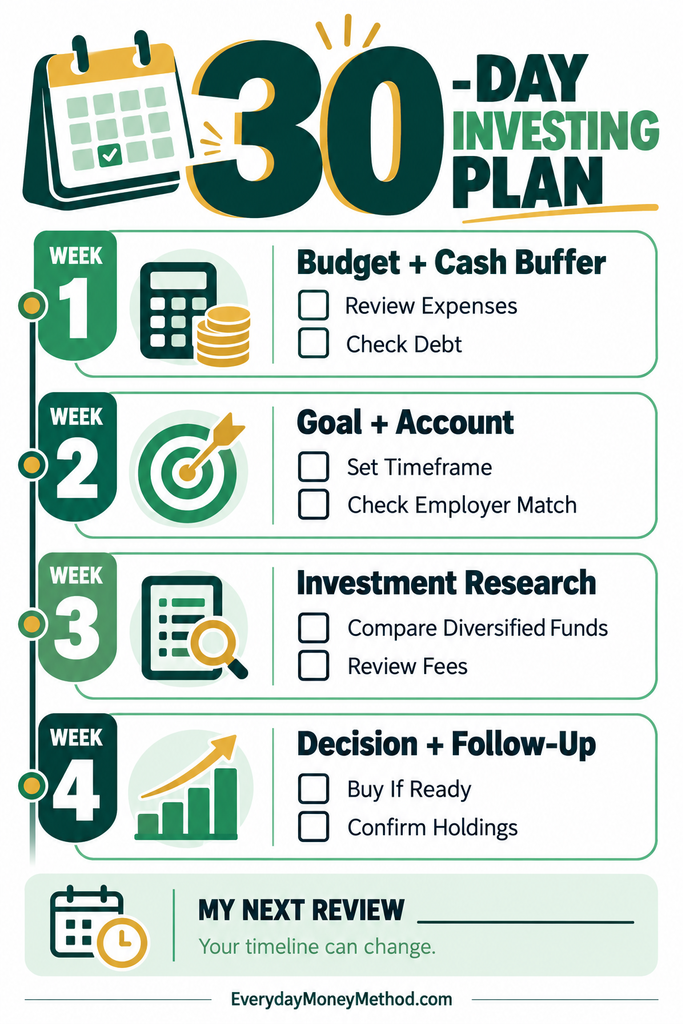
30-Day Beginner Investing Plan
Follow a four-week process covering financial readiness, account selection, investment research, and your first purchase if appropriate.
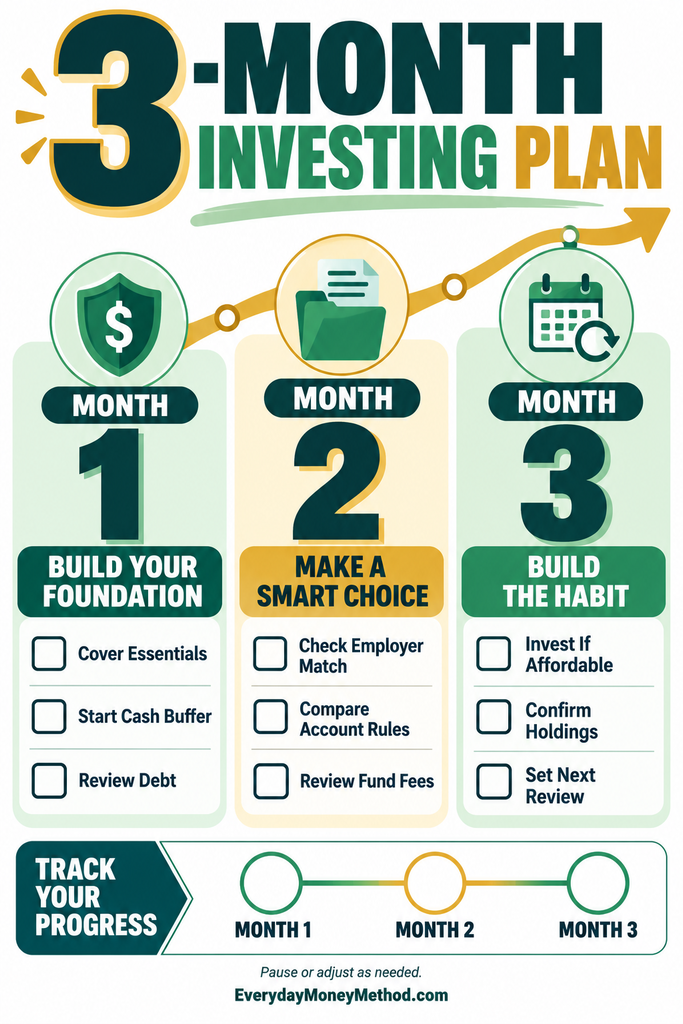
3-Month Investing Habit Builder
Take a slower approach to building emergency savings, addressing costly debt, researching investments, and developing affordable recurring contributions.
You can adjust any timeline or pause the process when necessary.
3. Printable Investing To-Do Lists
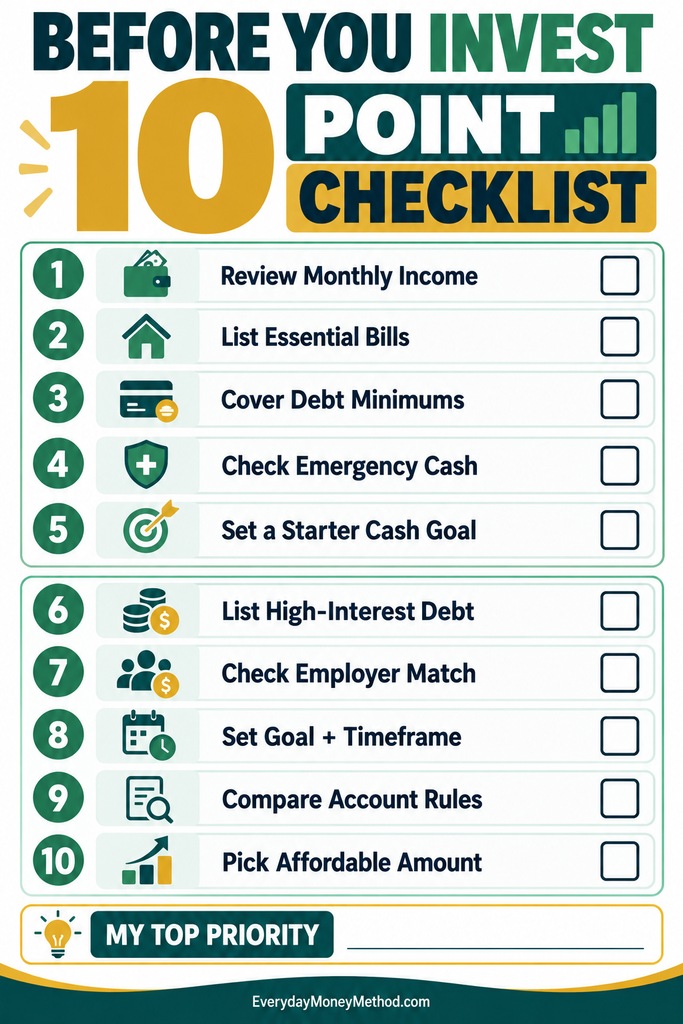
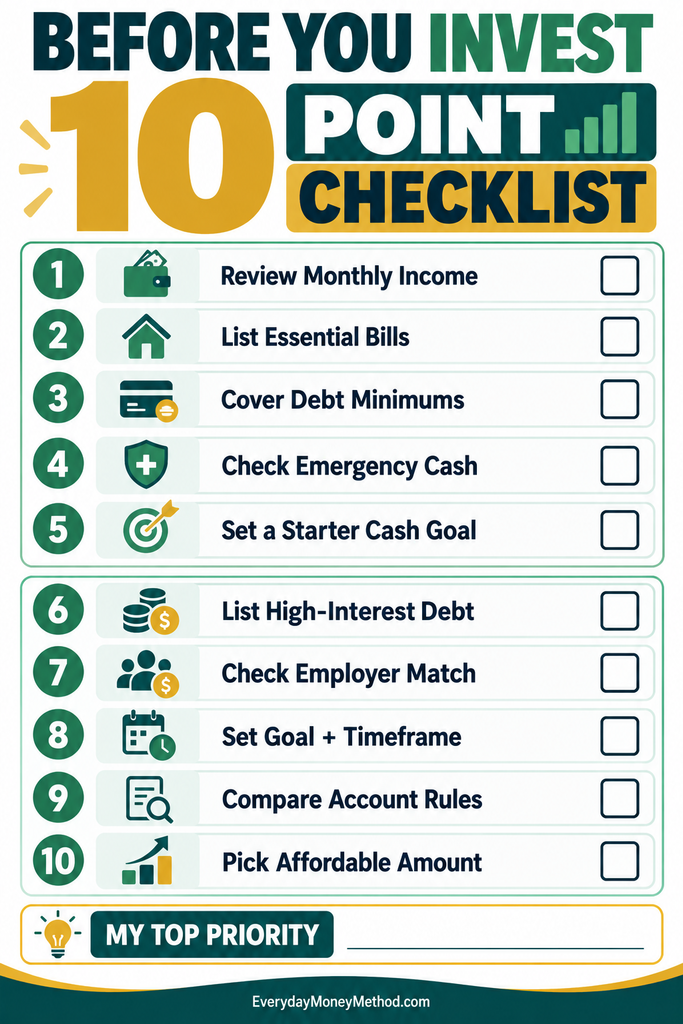
Before You Invest: 10-Point Checklist
Use this checklist to review essential bills, debt, emergency savings, investment goals, employer benefits, and your available investing budget.
First Investment & Follow-Up Checklist
Follow the steps for choosing an account, reviewing an investment, transferring funds, placing an order, confirming holdings, and setting up future contributions.
Keep in mind that an automatic transfer and an automatic investment purchase may require separate settings.
4. Beginner Investment Decision Flowchart
Am I Ready to Invest?
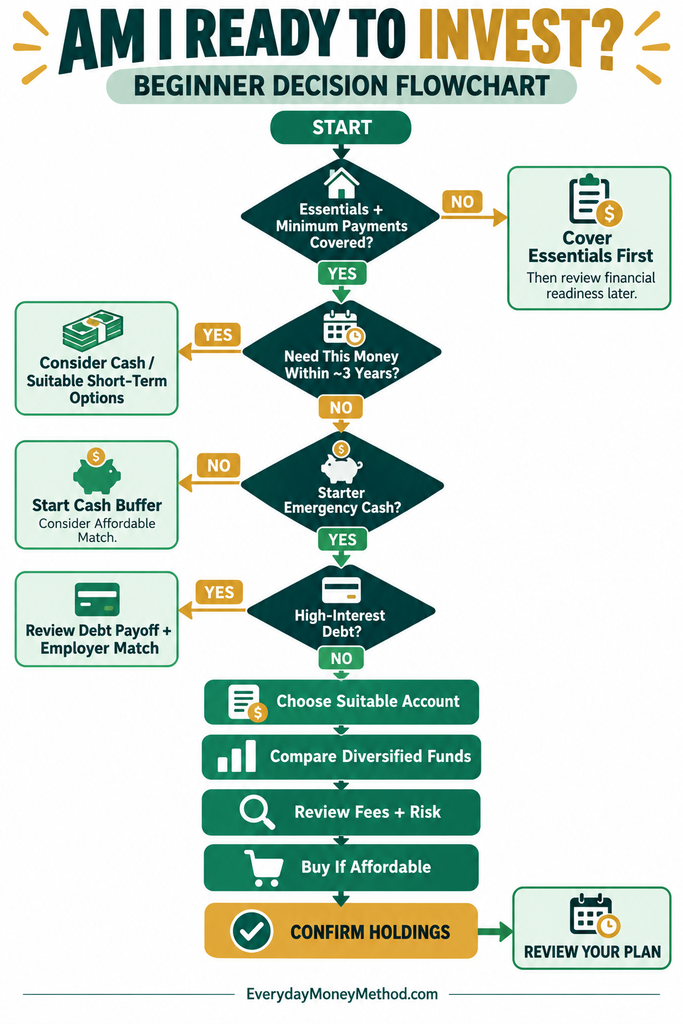
Use this visual decision guide to think through several important questions:
- Are your essential expenses and minimum debt payments covered?
- Will you need the money in the near future?
- Have you started building accessible emergency savings?
- Do you have high debt or an employer retirement match?
- Have you reviewed the investment account, fees, and risks?
The flowchart helps you identify a reasonable next step. It isn’t a guarantee that any particular investment is suitable for you.
How to Use These Printable Investing Resources
Start with the financial readiness worksheet and emergency fund calculator. Then choose the goal planner, account comparison worksheet, and action plan that apply to your situation.
Use the checklists when you’re ready to take action, and revisit your worksheets whenever your income, expenses, goals, or risk tolerance change.
Remember: Building an investing plan isn’t about rushing to buy your first stock. It’s about making informed financial decisions you can realistically maintain.
These worksheets and plans are for general educational purposes, not personalized investment, tax, or legal advice. Investment values can fall, and account eligibility, fees, and tax rules vary.
References and further reading
- Investor.gov — Introduction to investing
- IRS — 401(k) contribution limits
- Federal Reserve — 2025 financial well-being survey
These resources support the general educational topics discussed; individual circumstances and current rules may differ.
Continue learning
401(k) beginner guide · emergency fund guide · debt payoff guide · monthly budget guide

Personal finance writer and content creator at Everyday Money Method.
Editorial Policy · Report a correction