
Editorial voice: Monem · Published 2026-11-05 · Article resources updated November 18, 2026
Key takeaways
- Compare opportunities based on schedule, skill and startup costs.
- Test a small paid offer before committing significant money.
- Track costs and tax obligations; earnings vary.
General educational information, not personalized financial advice. Read our Financial Disclaimer.
Maybe you have two free evenings a week, but no desire to spend them driving across town. Maybe you have a skill people already ask you about, but no idea how to turn it into a paying service. Or maybe you just need a little more room in the budget before the next bill comes around.
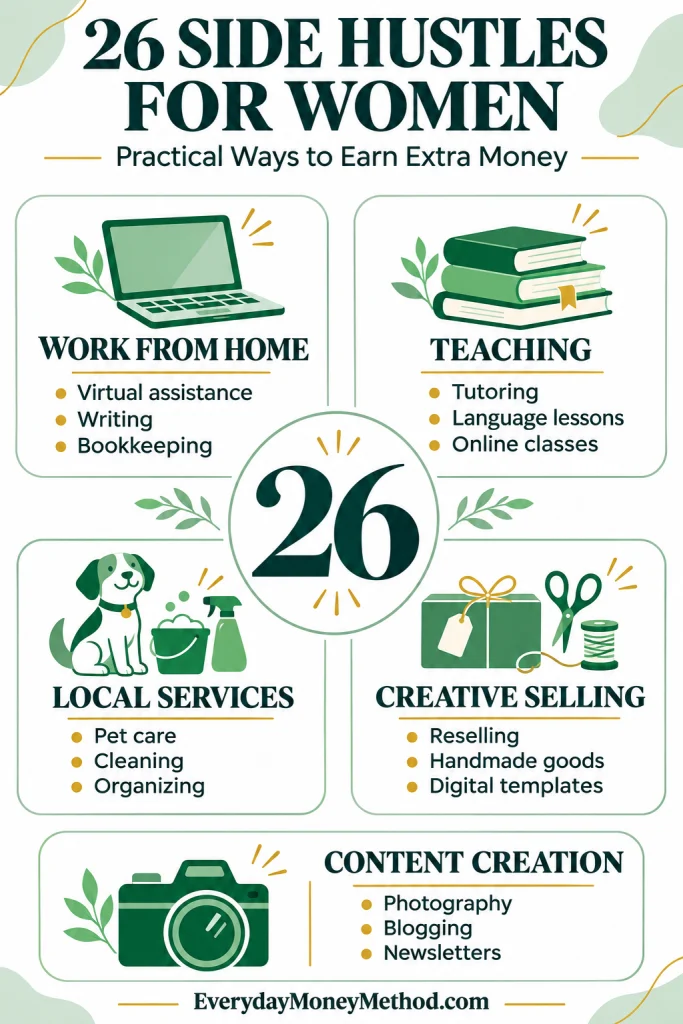
The best side hustles for women aren’t necessarily the ones promising thousands of dollars a month. They’re the ones you can start without putting your essential savings at risk, fit into your actual schedule, and eventually earn enough to justify your time. For many people, that means starting with a service they can offer now, such as tutoring, virtual assistance, pet care, or organizing, before trying a business that needs an audience or inventory.
Here’s a useful reality check. Bankrate’s 2025 U.S. survey found that people with side hustles reported average earnings of $885 per month, but the median was only $200. In other words, the big income stories don’t describe what the middle person earns.
We’ll look at practical ideas, real women’s experiences, the fees that rarely make it into an exciting headline, and a simple way to decide which option deserves your first week.
Which side hustle should you try first?
Related reading: Explore our side hustle guide for a complementary approach.
You don’t have to choose based on your age, whether you’re a mom, or what someone says women are supposed to be good at. Look at what you can already do, when someone would need you, and what you’d have to spend to begin.
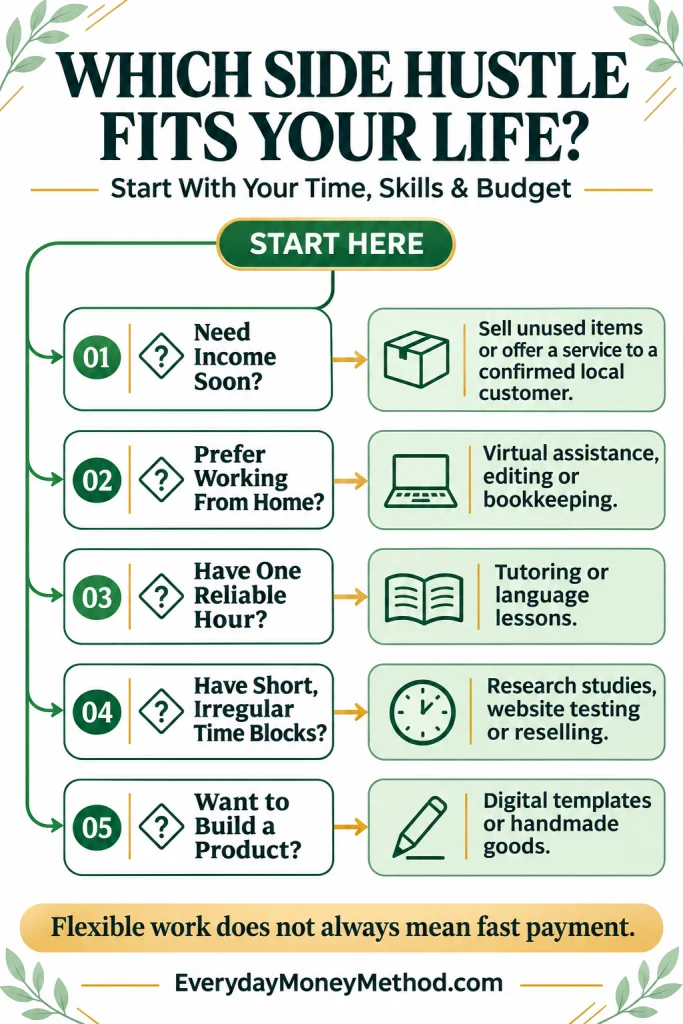
| If your situation looks like this | Start by considering | What to watch |
| You need income soon and can work locally | Babysitting, cleaning, errands, selling your own items | Finding the first customer; transportation and safety |
| You need to work from home | Virtual assistance, editing, bookkeeping, design | Competition and unpaid client outreach |
| You can reliably reserve an hour at a time | Subject tutoring, language lessons, online classes | Platform commissions, cancellations, preparation |
| You love animals and have a flexible calendar | Dog walking, drop-in pet visits | Trust, pet safety, slow initial bookings |
| You want to build a product over time | Templates, educational resources, handmade goods | Market demand, listing fees, returns, promotion |
| Your time comes in unpredictable small blocks | Research studies, website testing, reselling | Inconsistent availability or sales |
A small but important distinction: A flexible hustle isn’t automatically a fast-paying hustle. A marketplace may take weeks to approve you, and an online store can sit without a sale. If next week’s groceries depend on the money, prioritize work with a clearly agreed customer and payment date.
Side hustles for women you can do from home
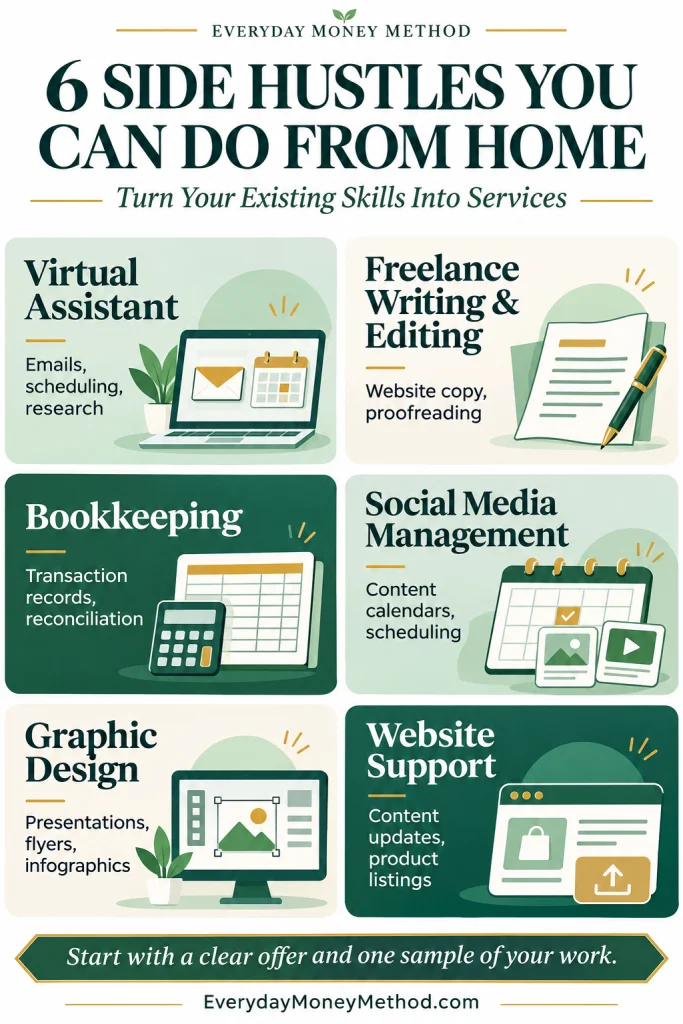
These are especially useful if commuting would eat up your earnings or you want to build on experience you already have. Not all of them are completely asynchronous: clients and students still have deadlines and meeting times.
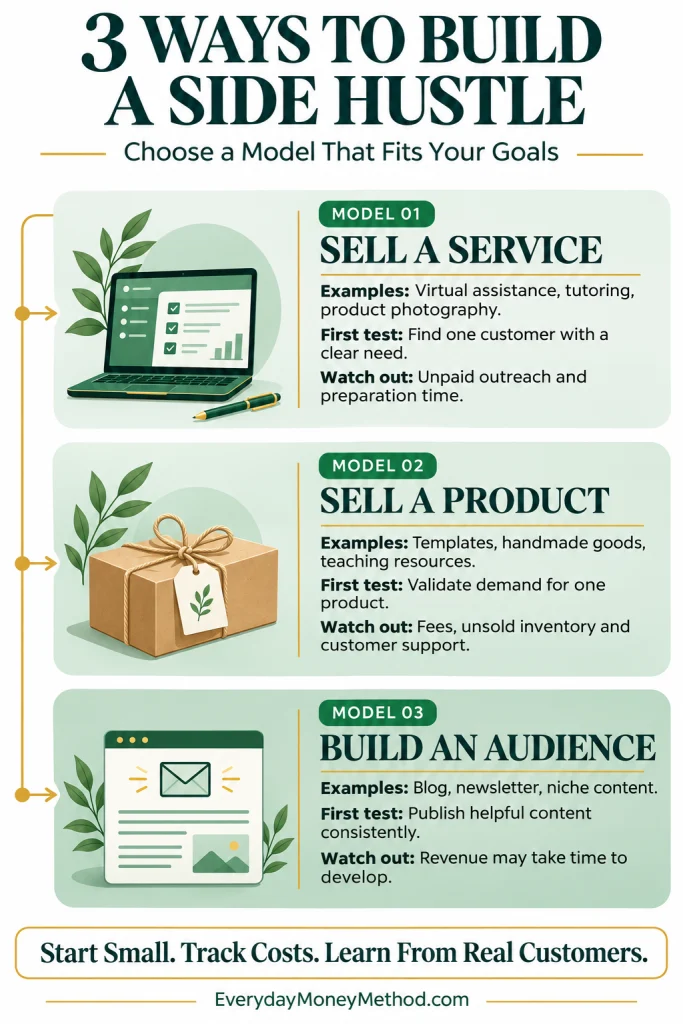
1. Become a virtual assistant
Related reading: Explore our monthly budget guide for a complementary approach.
A virtual assistant helps a person or business with tasks such as managing calendars, customer emails, spreadsheets, research, appointment confirmations, and online store updates. You don’t have to know every piece of business software to start. It is often better to offer two specific tasks well than a long list of things you barely know.
How to start: Write a simple offer: “I’ll organize your appointment requests and follow up with customers twice a week.” Show an example spreadsheet or workflow. Approach local service businesses and small business owners before spending months building a fancy website.
If you use a freelance marketplace, read its fees first. Upwork says its freelancer service fee can range from 0% to 15% per contract, depending on the terms shown when the contract is created. You also need to count your time pitching work, not just the hours a client pays for.
2. Offer freelance writing, editing, or proofreading
Think beyond “I’ll write anything.” A small accounting firm may need clear client FAQs. A wedding photographer might need website copy. An author might want a careful proofread of a short manuscript. Specific services make it easier for a buyer to understand what they’re paying for.
Real-life example: In an interview with Woman & Home, Ivy Ngeow, an architect, described writing stories and articles alongside her main career and getting paid when submissions were accepted. She chose to keep writing as a side pursuit partly because a full-time writing income felt uncertain to her. That is a useful counterweight to the idea that every successful creative side hustle needs to replace your job.
How to start: Create two samples that match the kind of work you’d like to get. Offer a small, clearly scoped project with one revision round. Fiverr’s help center says sellers generally receive 80% of completed order value, so a $100 order means $80 before your other costs and taxes.
3. Help small businesses with bookkeeping
Related reading: Explore our saving money quickly for a complementary approach.
If you already understand basic accounting or have experience reconciling transactions, bookkeeping can be more appealing than constantly chasing one-off tasks. You might categorize transactions, match receipts, reconcile bank accounts, and prepare routine reports. Tax advice and financial statement assurance are different services and may require qualifications you don’t have.
For instance, imagine a local landscaper who has receipts in a glove compartment and invoices in three different email folders. Organizing those records monthly can solve a recurring problem. Start with training in the software you intend to use, learn how to handle sensitive records securely, and define exactly what is and isn’t included.
Watch out: Don’t advertise yourself as a CPA or offer regulated professional services unless you’re qualified. Accurate bookkeeping requires care, confidentiality, and more than being “good with numbers.”
4. Manage social media for one local business
This isn’t about promising to make every post go viral. A realistic service might include a monthly content calendar, photographing new products, scheduling posts, and answering routine customer messages under the owner’s guidance.
How to start: Pick a niche you understand, such as salons, cafés, neighborhood shops, or contractors. Create three sample posts and a one-page calendar. Sell a defined monthly package instead of unlimited daily availability. Keep passwords and customer data secure, and agree who approves posts before they go live.
One woman’s Reddit account described doing social media work in exchange for grocery benefits rather than cash. That’s a creative arrangement, but barter is not the same as spendable income. If your goal is to pay rent, make sure the compensation actually matches it.
5. Create graphics and presentations
Businesses need menus, flyers, event graphics, pitch decks, simple infographics, and consistent social templates. If you have design skills, offer one finished result, such as a five-slide sales presentation or a set of restaurant menu updates.
A hypothetical $150 design project may sound good until you spend eight hours on revisions. That’s only $18.75 per hour before fees and taxes. A written scope, file-format agreement, and revision limit can protect both you and the client.
Use work you own or have permission to show in your portfolio. Check fonts, stock assets, and template licenses before transferring designs to a customer.
6. Offer website updates and basic online-store support
Lots of small businesses don’t need a brand-new website. They need someone to upload new products, fix broken formatting, update operating hours, add alt text, or test whether a contact form works. Those are concrete jobs with visible results.
How to start: Practice on a demo site or your own website. Create a checklist for backups, mobile layout, link testing, and change approvals. Start with low-risk content updates and stay away from payment-system changes or security-critical work until you can handle them properly.
A monthly maintenance arrangement can be convenient, but the workload has to be defined. “Unlimited fixes” can turn a small side gig into an unexpectedly large job.
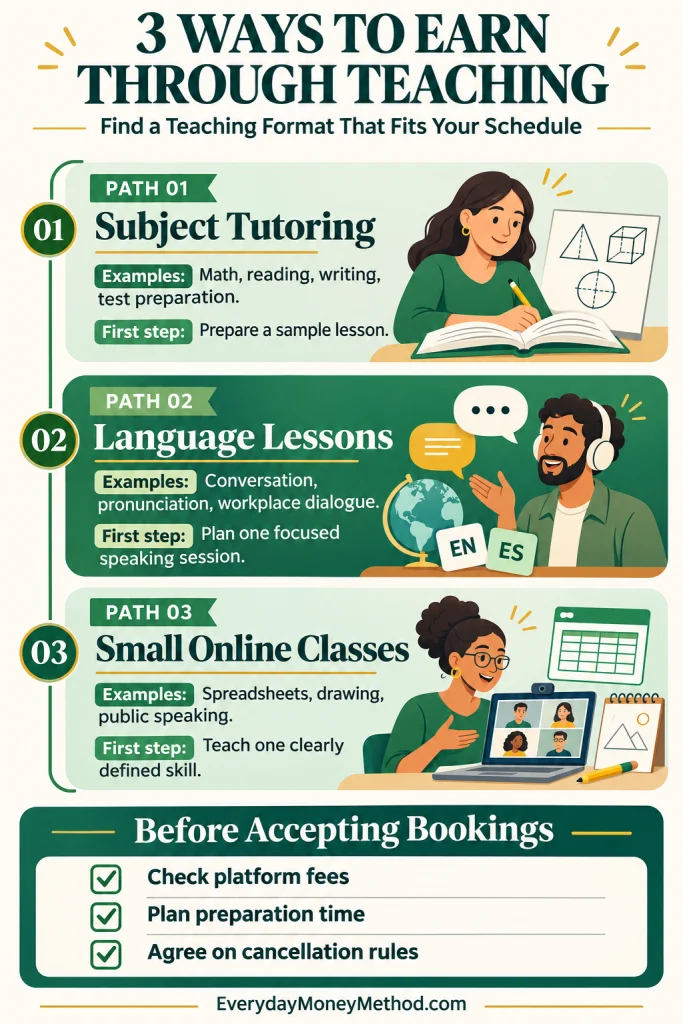
7. Tutor a school subject online or locally
If you’re strong in math, reading, writing, test prep, or a particular academic subject, you can teach one-to-one. You don’t need to claim you’re a certified teacher unless you are one. Instead, describe the subject and student level you can genuinely help.
A fee example: On Wyzant, tutors generally keep 75% of their listed hourly rate for platform-sourced lessons. Four completed $40 lessons would therefore produce $120 in tutor earnings before tax, not $160. Wyzant also has an exception for students referred by the tutor.
How to start: Offer a diagnostic lesson, explain your approach to parents or students, and prepare a repeatable lesson plan. For work with children, follow applicable screening, safeguarding, and communication rules.
8. Teach a language through conversation lessons
If you’re fluent in a language and can explain it patiently, consider practical conversation sessions: travel basics, workplace dialogue, or pronunciation practice. The challenge isn’t only knowing the language. It’s planning a lesson someone wants to book again.
Check the platform math: Preply says it takes 100% of the commissionable trial-lesson price for a first lesson with a new student. Its commission on later lessons starts at 33% and can decrease to 18%. A fully booked-looking calendar can therefore be misleading if many appointments are first trials.
You can also find students independently, but then you take responsibility for scheduling, payment, cancellations, and marketing.
9. Lead small online classes
One-to-one teaching isn’t the only option. You could teach beginner drawing, public speaking, spreadsheet basics, creative writing, or a topic in which you have genuine expertise. An engaging class needs a specific promised outcome and a plan for what students will do, not just what they’ll listen to.
Outschool says educators receive 70% of the class price, with the platform retaining a 30% teacher fee. Eligibility, background checks, content rules, and student-safety requirements matter, especially for classes involving children.
A useful first class might be “Make your first monthly budget spreadsheet,” not “Learn everything about finance.” A focused result is easier to prepare and explain.
10. Take paid research studies and test websites
This is one of the more flexible options if your free time is scattered. You might answer questions, complete a research activity, or speak aloud while testing a website. But it is not a dependable substitute for regular hours of paid work.
Prolific requires researchers to offer at least $8 per hour of study time and recommends $12, but that is the rate for available studies, not a promise you’ll receive enough studies to fill a workweek. UserTesting likewise says compensation depends on the specific test and is shown before you accept it.
How to start: Use legitimate platform websites, complete your profile accurately, and track actual time spent qualifying, waiting, and working. Be cautious of anyone demanding payment in advance to “unlock” survey earnings.
Local side hustles that can fit around other commitments
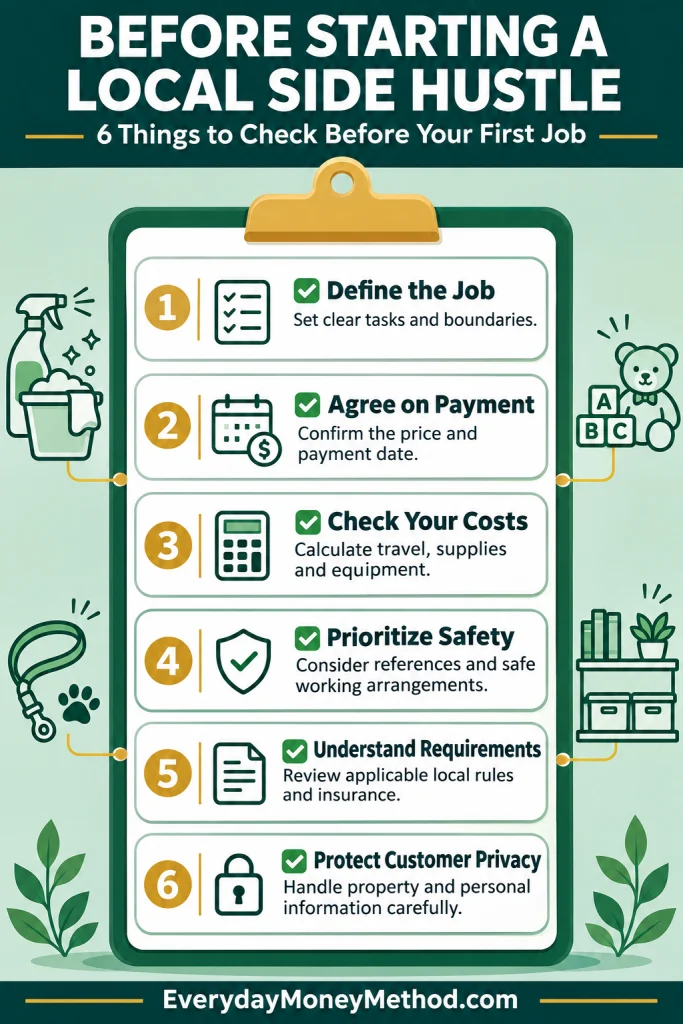
A local service can be less glamorous than an online business, but it has a real advantage: a nearby customer may have a problem that needs solving this week. Check transportation, safety, insurance, and local rules before you accept the work.
11. Walk dogs or care for pets
This can involve midday walks, feeding cats while owners travel, short check-ins, or overnight care if your home and circumstances allow it. Reliable communication, references, and knowledge of animal behavior matter more than an adorable profile picture.
Rover’s standard sitter fee is 20% per booking, although it says some U.S. sitters are in a pilot program with different fees, and California has separate terms. On a standard-fee $30 booking, the sitter would receive $24 before travel, supplies, and tax.
What real sitters report: In a Reddit discussion about whether it was worth paying to join Rover, several commenters described waiting one to three months for a booking. Others reported getting one sooner. Those are unverified personal reports, but they make an important point: don’t use your last emergency dollars for sign-up costs if you need immediate cash.
12. Babysit or provide occasional child care
Evening babysitting, school pickup assistance, and occasional weekend care are different services. Choose what you can provide safely and reliably, rather than advertising every possible arrangement.
Care.com’s guide, drawing on experienced babysitters, recommends a clear profile or résumé, strong references, and considering first-aid and CPR training. Laurie Bardon-Syphard, a former Baltimore sitter interviewed for the guide, described being able to choose clients and manage her own schedule. Her experience is an example of flexibility, not a promise of consistent bookings.
How to start: Ask trusted contacts whether they need occasional care, agree on hours and payment in writing, and review your state’s rules if you plan to care for children in your own home. Don’t promise care beyond your training or capacity.
13. Help people organize rooms, closets, and paperwork
Some people don’t need a complete home makeover. They need someone to sort a pantry, label storage boxes, organize a garage shelf, or set up a workable filing system.
You could offer a two-hour organizing session with a defined room and a simple checklist. Take before-and-after photos only with the customer’s permission. Never discard private papers, medications, financial records, or sentimental items without clear approval.
A useful first customer: Someone moving, downsizing, returning to work, or overwhelmed by one specific space. Organization is often a better offer than generic “lifestyle coaching” because the result is easy to see.
14. Run a wash-and-fold laundry service
Laundry can be a legitimate service when customers want convenience, but the costs are easy to underestimate. You’re paying for detergent, water, electricity, washer and dryer wear, packaging, pickup time, and delivery mileage. That’s before accounting for the hours spent folding.
Poplin describes a model in which Laundry Pros accept orders, pick up clothes, wash and fold them at home, and return them. Its marketing highlights high-earning providers; that is not an estimate of what a beginner will make. Independent review site SideHusl also flags platform commissions and operational costs.
How to start: Calculate the cost of one average order using your own machines and driving distance. Confirm hygiene, customer-item, and liability policies. Start with a small service area instead of accepting every distant pickup.
15. Clean homes or small offices
Cleaning can be a straightforward service to explain: two bathrooms and a kitchen, a move-out clean, or a recurring office visit. But it is physical work, and quoting a price without seeing the job can be expensive.
How to start: Make a room-by-room checklist, decide which supplies you provide, and define what is excluded, such as hazardous materials, high ladders, or heavy lifting. Check local licensing, insurance, and workplace-safety requirements. Agree on access and payment procedures before entering a client’s property.
Rather than buying a full set of professional equipment immediately, confirm that someone wants your specific service first.
16. Work as an event or wedding assistant
Think setup, vendor check-ins, guest directions, gift-table management, breakdown, or day-of coordination. A reliable assistant who can follow a schedule and solve small problems can be valuable to a busy event professional.
Start by contacting established event planners, photographers, caterers, and venues about occasional contract help. Ask what the shift involves, whether you’ll lift equipment, when payment is made, and who supervises the work.
Event work often happens during weekends and evenings, which can suit a weekday employee but not someone who needs weekends free. The job may also require long stretches standing up and getting home late.
17. Referee or umpire youth sports
This one rarely shows up in the usual list of side hustles for women, yet sports leagues need officials. You must know the rules, stay calm under criticism, and sometimes complete training or background checks.
In a Reddit post, one part-time baseball and softball official reported earning $1,275 across 17 games during April and May of one season. That’s a self-reported example, not a rate card or guarantee. The same commenter noted that transportation was necessary.
How to start: Contact local recreation departments, youth leagues, or referee associations. Ask about beginner training, fees, uniforms, seasonal game availability, and travel distance. Divide your total pay by all time spent, including driving and preparation.
18. Shop for groceries or make deliveries
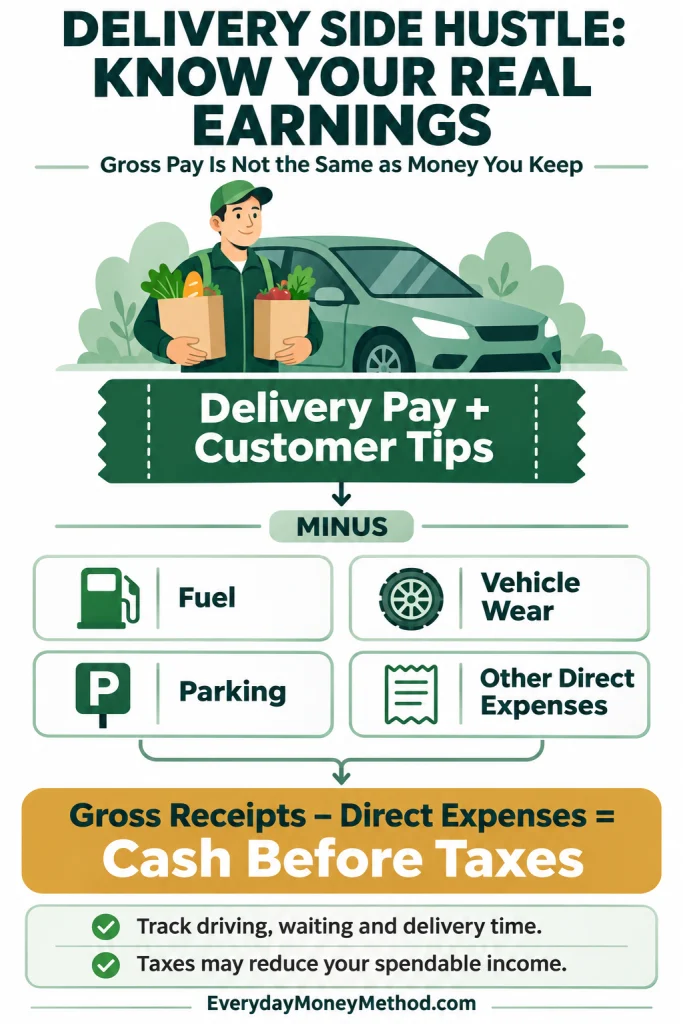
Delivery apps can let you choose when to accept orders. But “I earned $100 today” doesn’t tell you how much cash is left after fuel, tires, vehicle wear, insurance, parking, and taxes.
Instacart says shoppers can receive batch earnings, promotions, and 100% of customer tips. Actual offers vary, so it makes sense to evaluate the orders available in your market rather than assume someone else’s earnings will repeat.
How to start: Try a limited block of time, record miles and direct expenses, and compare the result with the hours you spent driving and waiting. Check vehicle insurance coverage for delivery work and avoid unsafe or unprofitable trips.
19. Offer errands, assembly, or other practical help
Some customers need help carrying boxes, assembling simple furniture, organizing a move, or running permitted errands. You might find clients through neighbors, referrals, or a task marketplace.
Taskrabbit says it charges a one-time, nonrefundable $25 registration fee when a U.S. Tasker application is successfully processed, and paying it does not guarantee approval. That is different from an unsolicited recruiter charging you to “release” work, but it still means you shouldn’t register without assessing demand.
Start with tasks you can do safely, not electrical, plumbing, structural, or other regulated work outside your qualifications.
Creative and selling side hustles for women
These can be rewarding, especially if you enjoy making things. They also require a different kind of patience. Selling the first product is a separate skill from creating it.
20. Resell clothes, books, or household items
Before spending money at thrift stores, look at what you already own and no longer use. Photograph items clearly, describe condition honestly, and check completed-sale prices rather than hopeful listing prices.
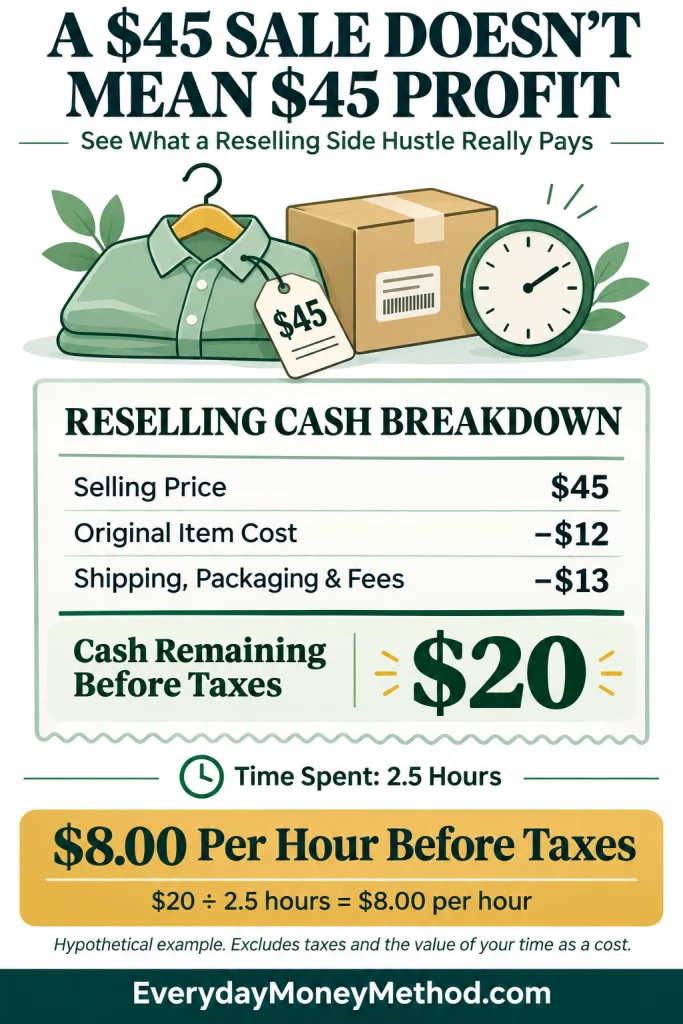
Hypothetical example: You sell an item for $45. It originally cost you $12, and shipping, packaging, and marketplace fees total $13. That leaves $20 before taxes and the value of your time. If buying, photographing, listing, packing, and shipping took two and a half hours, that works out to $8 per hour. The arithmetic matters more than the impressive $45 sale price.
What a real reseller reported: In a Reddit discussion, one woman said she thrifts clothes, sometimes wears them for a while, and then resells them on Depop. She shared an approach, not independently verified profits.
How to start: List five items you already have, track what actually sells, and only then decide whether to buy inventory. Platform fees and shipping policies change, so check them for every marketplace you use.
21. Sell original digital templates or printables
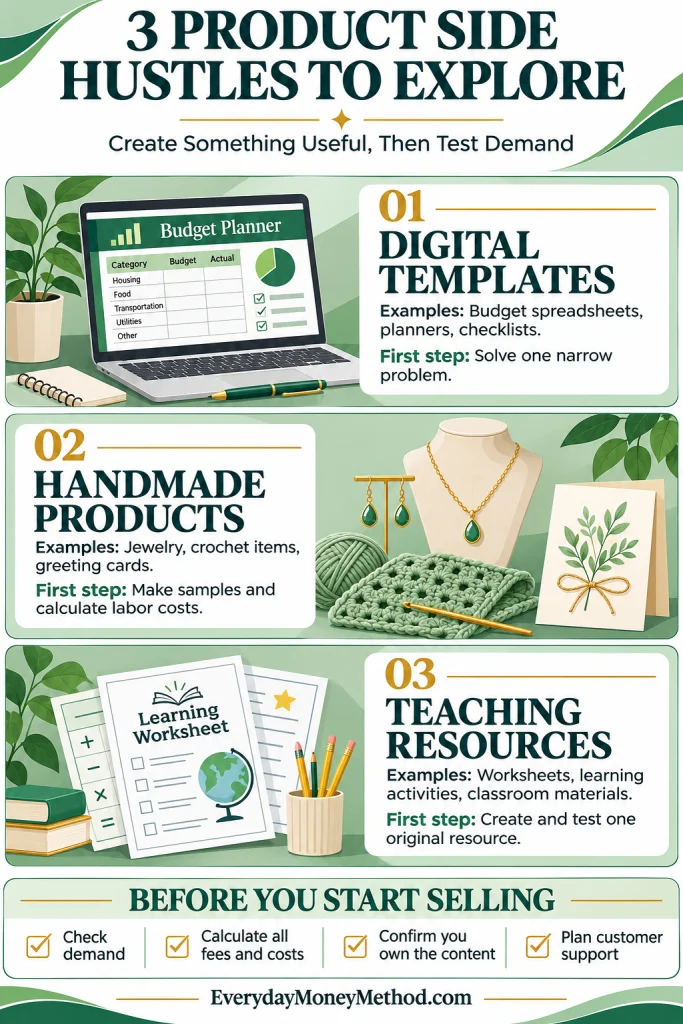
A useful spreadsheet, classroom planner, party checklist, habit tracker, or editable invitation can be sold more than once. But “make it once, sell forever” skips the work of testing, customer support, updates, and getting discovered.
Etsy currently lists a $0.20 listing fee and a 6.5% transaction fee, plus payment processing and other possible charges, including a location-dependent shop setup fee.
How to start: Solve one narrow problem. Instead of “ultimate planner bundle,” make something like “weekly meal planner for two adults with a shared grocery list.” Test it with actual users, include clear instructions, and use assets you are legally allowed to sell.
22. Make and sell handmade products
Jewelry, crochet items, greeting cards, decorations, and personalized gifts can be a good fit if you already enjoy making them. The trap is pricing materials but forgetting your time.
Real-life example: Paulomi Debnath, founder of Handmade by Tinni, told Woman & Home she began experimenting with cotton-rope jewelry for herself. Interest from friends and colleagues led to sales, and she later launched her business. She also described the exhaustion of balancing it with a demanding full-time career and parenting.
How to start: Make three examples, calculate materials and labor, and take a small number of preorders before buying supplies in bulk. If you sell products for children or products applied to the body, check relevant safety and labeling rules.
23. Sell teaching resources you created
If you work in education or have experience designing lessons, original worksheets, classroom activities, rubrics, and learning games may be useful to other educators. Check your employment agreement and school policies to be sure you own the materials you’re selling.
Teachers Pay Teachers lists two seller plans. Its July 2026 help page shows a $29 one-time fee with a 55% payout for Basic Seller and $59.95 per year with an 80% payout for Premium Seller, with additional transaction rules. That makes the economics very different from simply collecting the sticker price on each download.
Start by making one genuinely useful resource, testing it, and comparing actual receipts with the time it takes to create and support.
24. Build a newsletter, blog, or useful niche audience
A newsletter about affordable local activities, gardening in a specific climate, a professional specialty, or a hobby can eventually support sponsorships, memberships, or affiliate links. This is usually a slower-build option, not emergency income.
Kit describes food creator Tori Avey testing paid sponsorships in her cooking newsletter and finding that the best-performing sponsor was not the food brand she expected. This is a real creator account presented by the platform, not proof that a new newsletter will attract advertisers or earn a particular amount. Patreon also charges platform fees and processing fees, so subscription revenue is not the same as what reaches your bank account.
How to start: Publish something useful consistently, learn what readers return for, and only add monetization when there is a real audience to serve. Sponsorships and affiliate recommendations should be transparently disclosed.
25. Teach an in-person workshop or make a focused course
A workshop doesn’t have to begin as a giant recorded course. You could teach basic phone photography, beginner sewing, home budgeting, or an introductory software skill to a small group.
Real-life example: In a Teachable case study, Abagail Pumphrey described shifting from client work toward focused courses and digital products. The company’s story highlights a $29 product and substantial later revenue, but those are a mature creator’s claimed results, not a typical beginner outcome.
A more realistic first experiment is a one-hour workshop for a handful of people with a specific result. Confirm interest and costs for the room, equipment, refunds, and preparation before committing to a venue.
26. Create product photos or short videos for businesses
If you can film clear, well-lit product demonstrations or take appealing photos, you could help a small brand create material for its website or social accounts. This is different from becoming an influencer: the company may be buying your finished content, not access to your followers.
How to start: Create three sample pieces using products you own. Explain what your price covers: planning, shooting, editing, revisions, and usage rights. Don’t promise that your work will produce sales, and don’t use copyrighted music or someone else’s images without permission.
This works best when you enjoy the process itself. The behind-the-scenes time can be much longer than a finished 30-second video suggests.
What real women say about the less glamorous parts
A list of possibilities is easy to write. Living with the extra work is harder.
In Woman & Home’s interviews, Cassie Brooks described the administrative demands that come with publishing children’s books while working as an accounting analyst. Ivy Ngeow talked about how promotional and administrative duties become another job on top of writing. Paulomi Debnath described working on jewelry in the evenings and dedicating bigger blocks of weekend time to her business.
On Reddit, pet sitters described very different first-booking timelines, from roughly a week to several months. Another part-time sports official shared actual game counts and earnings for a limited period. Their stories aren’t independently audited, but together they show why a universal income promise would be misleading.
The pattern is simple: you are not just doing the paid task. You’re finding customers, sending messages, buying supplies, traveling, rescheduling, and keeping records. Those hours belong in the calculation too.
How much money would you actually keep?
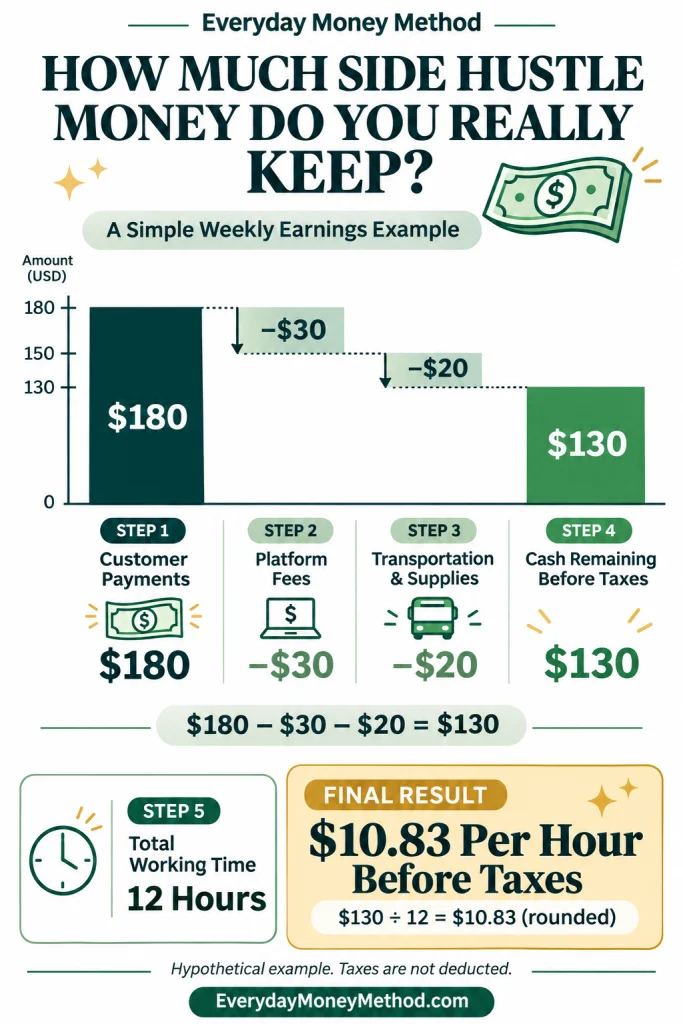
Suppose you receive $180 from a week’s side-hustle work. Here’s a purely hypothetical breakdown:
| Item | Amount |
| Customer payments received | $180 |
| Platform fees | -$30 |
| Transportation and supplies | -$20 |
| Cash remaining before taxes | $130 |
| Total time, including unpaid tasks | 12 hours |
| Cash remaining per hour before taxes | $10.83 |
That’s not $15 per hour simply because $180 divided by 12 is $15. The fees and expenses are real, and taxes may reduce what you can ultimately spend further. Your own costs could be lower or much higher.
For each opportunity, record gross receipts, platform fees, direct expenses, unpaid hours, and money left before taxes. Don’t compare a gig’s gross revenue with the take-home pay from your regular job.
A realistic seven-day plan to start a side hustle
You don’t need to register for six apps or order a stack of supplies on day one. Use a small test to learn whether an idea works in your life.
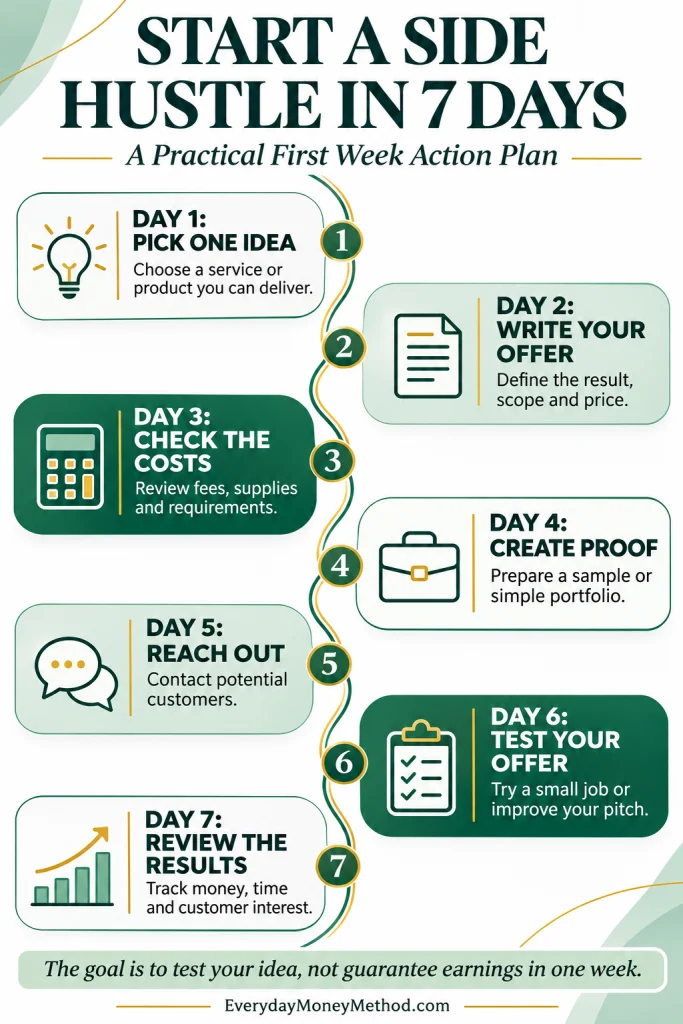
Day 1: Pick one service or product. Choose something you can already deliver safely, with a clearly defined customer.
Day 2: Write the offer. Describe the result, the price or pricing method, what is included, and when it will be finished.
Day 3: Check the costs. Look up applicable platform terms, materials, travel, insurance, training, and local rules. Set a maximum amount you’re comfortable risking.
Day 4: Create proof. Make a sample, short portfolio, checklist, or description of relevant experience. Do not invent testimonials.
Day 5: Reach out. Contact a small number of suitable prospects or post in a relevant local community where promotion is allowed.
Day 6: Try one small job. If someone books you, confirm the scope and payment. If not, note the objections or questions and improve the offer.
Day 7: Review the numbers. Count time and cash spent, requests received, bookings, and what you would change. Keep, adjust, or drop the idea based on evidence.
You might not earn anything in seven days, especially with a marketplace or product business. The goal of the week is to avoid spending a month on a plan that never meets a real customer.
Side-hustle mistakes that can cost you money
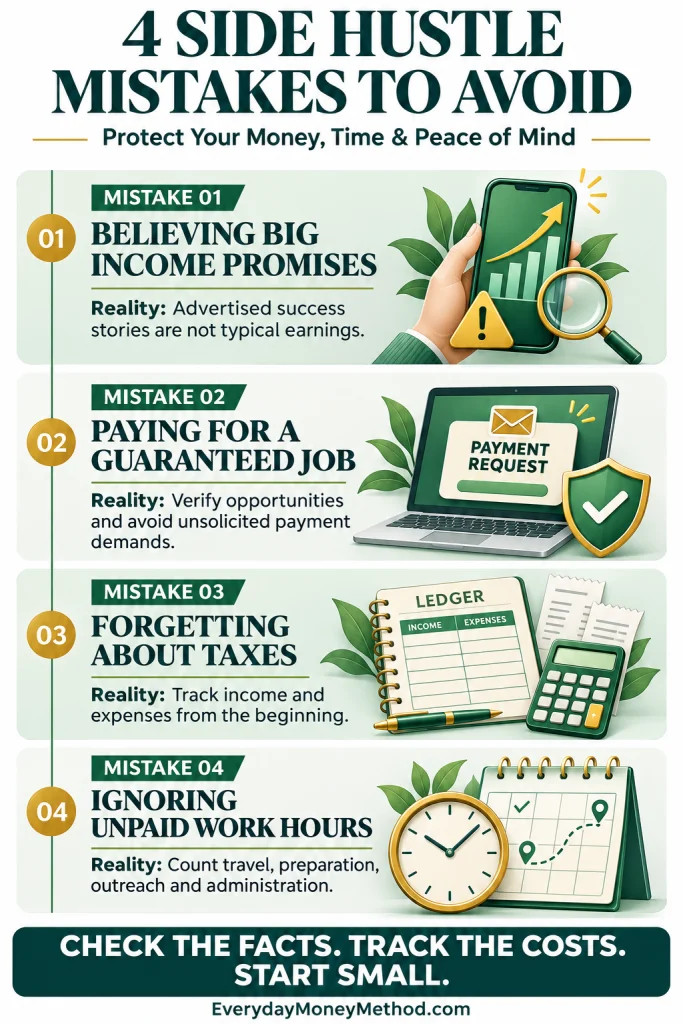
Believing an advertised monthly income
The most successful seller, creator, or shopper on a platform is not a reasonable estimate for the newest person signing up. Bankrate’s much-lower median compared with its average is one reminder of that difference.
Paying a stranger for a guaranteed job
The Federal Trade Commission warns that fake side-hustle opportunities can involve upfront payment requests, misleading recruitment messages, and claims of easy earnings. Search the company name alongside words such as “scam,” “review,” and “complaint,” and verify opportunities through official sites. Don’t send money to an unsolicited recruiter who claims it’s necessary to unlock work.
Be especially wary of business models that require you to buy inventory or recruit other sellers before you can earn. The FTC’s review of multi-level-marketing income disclosures found that many participants made little or no money, often before expenses.
Forgetting taxes until money is already spent
For U.S. independent contractors, the IRS says gig-work income is reportable even without a Form 1099, and $400 or more in net self-employment earnings generally triggers a federal filing requirement. Depending on your situation, you may need estimated tax payments; eligible business expenses can matter too.
Track payments and receipts from the beginning. Tax rules, business permits, insurance, and caregiver requirements differ by location and type of work.
Treating every open hour as an earning hour
An hour spent delivering the job can require another hour of communication, travel, shopping, or cleanup. Protect time for rest and existing commitments. A hustle that constantly disrupts work, sleep, or caregiving may not be worth a modest financial return.
Frequently asked questions
What are the best side hustles for women with no experience?
Start with work that doesn’t require you to pretend you have qualifications you lack: selling unused items, simple errands, entry-level administrative tasks, cleaning within your ability, or participating in legitimate research studies. For child care, pet care, and other safety-sensitive services, relevant experience, references, training, and insurance still matter.
What are the best side hustles for stay-at-home moms?
The best choice depends on the actual childcare arrangement and available uninterrupted time. Editing, bookkeeping, templates, and administrative work may be done from home but still have deadlines. Pet boarding, laundry work, or watching other children may create additional care and safety responsibilities, not automatically solve scheduling problems. A small, repeatable task you can do in an agreed time block is often the better test.
Which side hustle can make money the fastest?
Work with a confirmed buyer or customer, such as selling items you already own or arranging a specific local service, may get you paid sooner than building an audience or waiting for a new platform profile to attract bookings. Timing depends on demand, approval rules, and when payment clears. Avoid borrowing money to fund an untested hustle.
Can I earn an extra $500 a month?
It’s possible, but not guaranteed. Bankrate’s 2025 survey found only about a quarter of current side hustlers reported earning more than $500 per month. If $500 is your goal, calculate how many completed jobs you’d need after fees and expenses, then ask whether that many bookings fit your available hours.
Do I need an LLC to start?
Not every side hustle requires an LLC. The right legal structure depends on the work, where you live, liability exposure, taxes, and any local licensing requirements. Don’t assume an LLC replaces appropriate insurance or professional qualifications. Seek jurisdiction-specific guidance before choosing a structure.
The best side hustle is one you can test without risking your stability
If you’re looking for side hustles for women, choose one idea from this list that fits the hours you actually have. Write down the offer, the startup cost, and how you’ll find the first paying customer. Then test it on a small scale.
You don’t need a perfect business plan or someone else’s six-figure story. You need an honest answer to a more useful question: After the costs, the waiting, and the work, is this helping you keep more money?
References and further reading
These resources support the general educational topics discussed; individual circumstances and current rules may differ.
Continue learning
side hustle guide · monthly budget guide · saving money quickly · emergency fund guide

Personal finance writer and content creator at Everyday Money Method.
Editorial Policy · Report a correction